

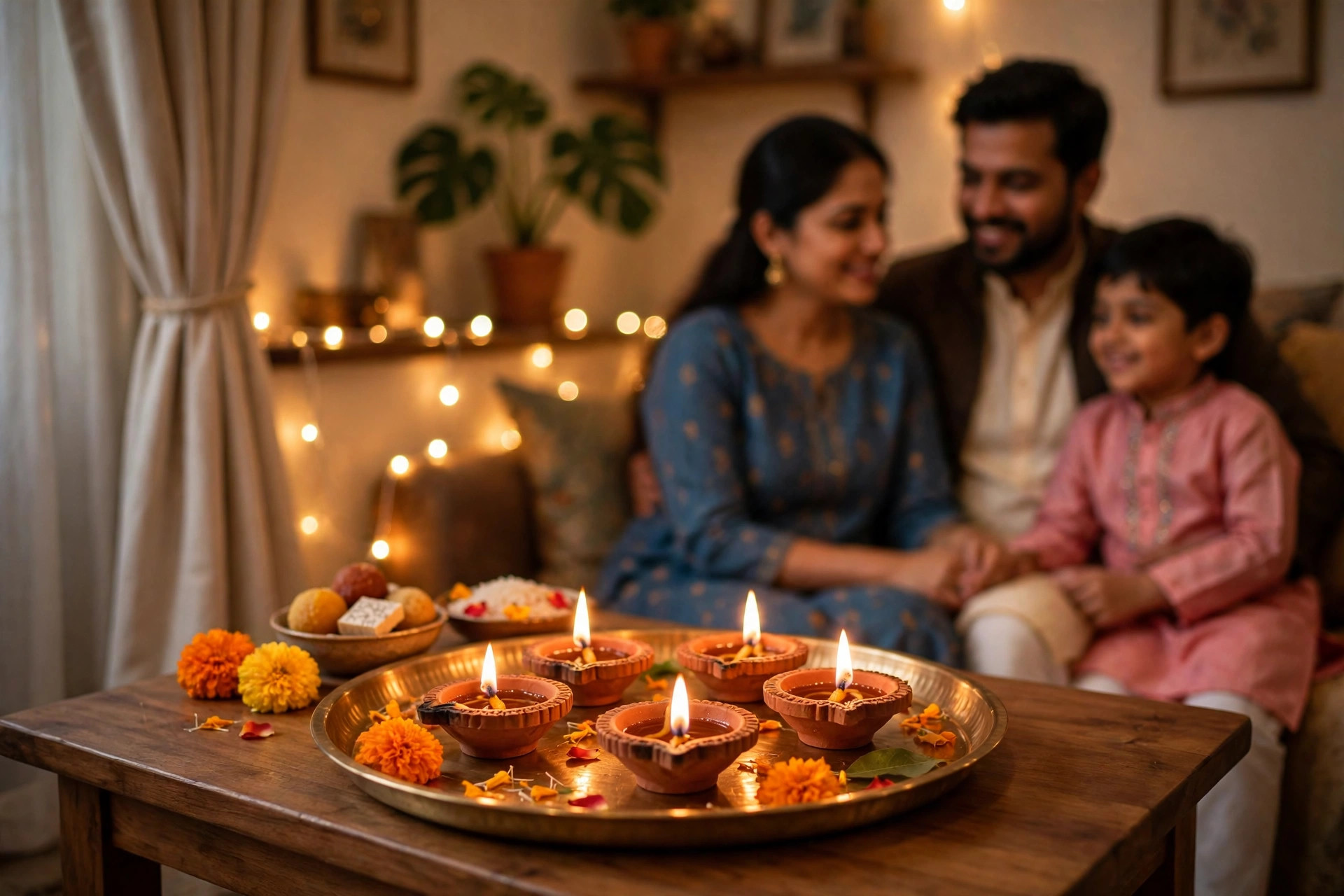
Diwali is a festival of light, and light deserves respect. Most Diwali accidents at home are not dramatic. They are small and preventable: a diya too close to a curtain, too many fairy lights on one socket, a child in a flowing outfit near a sparkler, a pet that panics at the sound of crackers. A little planning before the festival keeps the celebration joyful instead of stressful.
This guide is a complete, room by room safety checklist for Indian homes. It goes further than the short tip lists you will find elsewhere, because it covers the things those lists miss: electrical load, safe clothing, a calm plan for pets, what to keep in a first aid kit, and what to do after Diwali is over. If you are still planning your decorations, start with our Diwali home cleaning checklist, which helps you clear clutter and create safe, open spaces before you decorate.
The Golden Rule: Never Leave a Flame Unattended
Every other tip in this guide follows from one rule. A lit diya, candle, or sparkler should always have an adult watching it. If everyone is leaving the room, going to bed, or heading out to burst crackers, extinguish the flames first. It takes thirty seconds, and it removes the single biggest fire risk in a Diwali home.
Teach this rule to everyone in the house before Diwali, including older children and guests. When the rule is shared, no one has to be the only person worrying about safety while everyone else celebrates.
Diya Safety: Placement Matters More Than the Diya Itself
Diyas are beautiful, and they are also open flames. Safe placement is what makes them safe to enjoy.
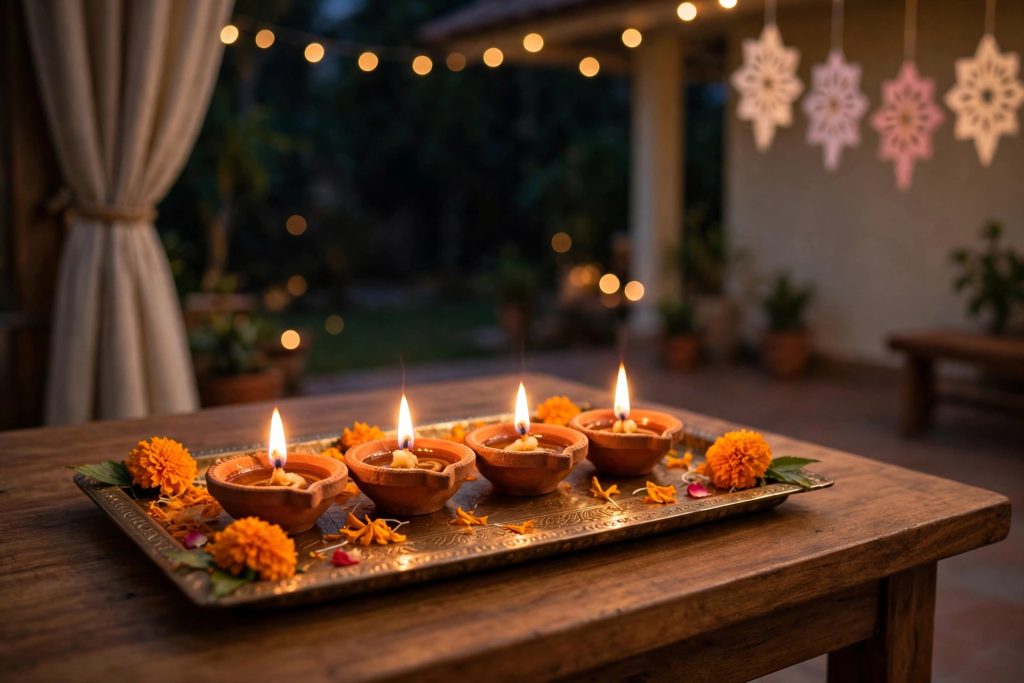
Use a stable, heat resistant base: Place every diya on a flat, stable surface, ideally on a metal tray, a brass plate, or a stone coaster. A tray catches spilled oil and stops a diya from tipping onto wood, cloth, or paper. Never place a diya directly on a bedsheet, a sofa, a pile of clothes, or a paper rangoli.
Keep a clear zone around each flame: Leave at least 30 cm between a lit diya and curtains, paper decorations, torans, flower garlands, table runners, and any other flammable material. Dried flowers and paper decorations catch fire far faster than most people expect. If you have just made a toran, check our DIY Diwali toran ideas and keep paper and fabric torans well away from flames.
Mind draughts and edges: Do not place diyas near open windows where wind can blow the flame, on narrow shelf edges where they can be knocked off, or on the floor in a walkway where someone can step on them. High shelves are not automatically safe either, if children can climb to reach them.
Fill and light with care: Fill diyas only three quarters full, so oil does not spill when you move them. Light them where they will stay, rather than lighting them and carrying a burning diya across the room. Trim long wicks, because a very long wick makes a tall, smoky flame that is harder to control.
Extinguish properly: Blow out diyas gently from the side, not from directly above, so you do not splash hot oil. Never leave diyas burning overnight, and never leave them burning in a room where everyone has gone to sleep. For rooms where a real flame is hard to supervise, such as a bedroom or a room with small children, use LED diyas instead. They give the same warm glow with none of the fire risk.
Fairy Lights and Electrical Safety: The Hidden Risk
Fairy lights feel harmless because they are not open flames, but overloaded sockets and damaged wires cause many Diwali fires. Treat lights like any other electrical appliance.
- Check every string before you hang it. Look for frayed wires, cracked bulbs, loose plugs, and warm adapters. Throw away damaged strings. Do not try to repair them with tape.
- Do not overload a socket or extension board. One socket should not run multiple heavy strings, a heater, and a charger at the same time. If an extension board feels warm, unplug something.
- Use outdoor rated lights outdoors. Indoor lights are not sealed against rain or dew and can short circuit outside. Check the label before you hang lights on a balcony or in a garden.
- Keep lights away from curtains, paper, and dried flowers. Even LED lights generate some heat at the adapter, and older incandescent strings get much hotter.
- Turn lights off when you go to bed or leave the house. A timer plug is a simple way to make sure lights do not stay on all night.
- Do not run wires under carpets, rugs, or doors where they can be damaged or tripped over. Keep wires where you can see them and where feet will not catch them.
- If a socket sparks, smells of burning, or feels hot, switch it off at the mains and do not use it again until an electrician has checked it.
Crackers: Rules That Protect Everyone, Including Neighbours
Crackers are the loudest, most exciting, and most risky part of Diwali. A few clear rules keep the fun without the injuries.
Choose an open space: Burst crackers only in an open area, away from houses, parked vehicles, dry leaves, and overhead wires. Never burst crackers inside a room, on a balcony, in a corridor, or near a petrol pump or gas cylinder.
One person lights, everyone else steps back: Only one adult should light a cracker at a time, using a long incense stick or sparkler, not a match held close to the hand. Everyone else, especially children, should stand well back and watch from a safe distance.
Keep water and sand nearby: Keep a bucket of water and a bucket of sand close to the bursting area. Water is for cooling and for soaking used crackers. Sand is for smothering a small fire. Do not use water on an electrical fire.
Store crackers safely: Store crackers in a cool, dry place, away from diyas, candles, stoves, and direct sunlight. Do not keep them in pockets, where body heat and friction can be dangerous, and do not let children carry loose crackers.
Be kind to neighbours: Follow local timing rules for bursting crackers, and keep the noise down late at night. Warn neighbours with elderly people, babies, or pets, so they can prepare. After bursting, clear up the debris promptly, so no one steps on a sharp or still hot piece.
Clothing Safety: Festive Clothes and Open Flames Do Not Mix Well
Festive clothes are often long, loose, and flowing, which makes them easy to catch on a diya or a sparkler. A little planning keeps everyone comfortable and safe.
- Choose fitted sleeves near flames. If you are lighting diyas or crackers, roll up long sleeves, or wear a fitted kurta or blouse for that part of the evening.
- Avoid very long, trailing dupattas, saree pallus, or shawls near open flames. Pin them back or drape them over the opposite shoulder when you are near diyas.
- Dress children in fitted, cotton clothes for cracker time. Avoid synthetic fabrics that melt when they catch fire, and avoid long, loose outfits that can trail into a flame.
- Wear closed shoes outdoors. Sandals and bare feet are at risk from hot debris, sharp pieces, and sparks on the ground.
- Keep a shawl or blanket away from diyas. If you are sitting near diyas for a long time, check that nothing you are wearing is resting near a flame.
Children: Make Safety Part of the Fun, Not a Lecture
Children learn safety best when they have a job to do and a clear rule to follow. Give them responsibility, and keep the risky jobs for adults.
Give children safe jobs: Let children arrange diyas on a tray before they are lit, make rangoli, hang paper decorations, or hand out sweets. These jobs make them part of Diwali without putting them near a flame.
Keep lighting and bursting adult only: Children should never light diyas, candles, or crackers on their own, and should never pick up a cracker that has not burst. Teach them to tell an adult straight away if they find a dud cracker.
Teach the basics in simple words: Stop, drop, and roll if clothes catch fire. Do not run. Call for an adult. Show them where the bucket of water is, and where to stand when crackers are being burst.
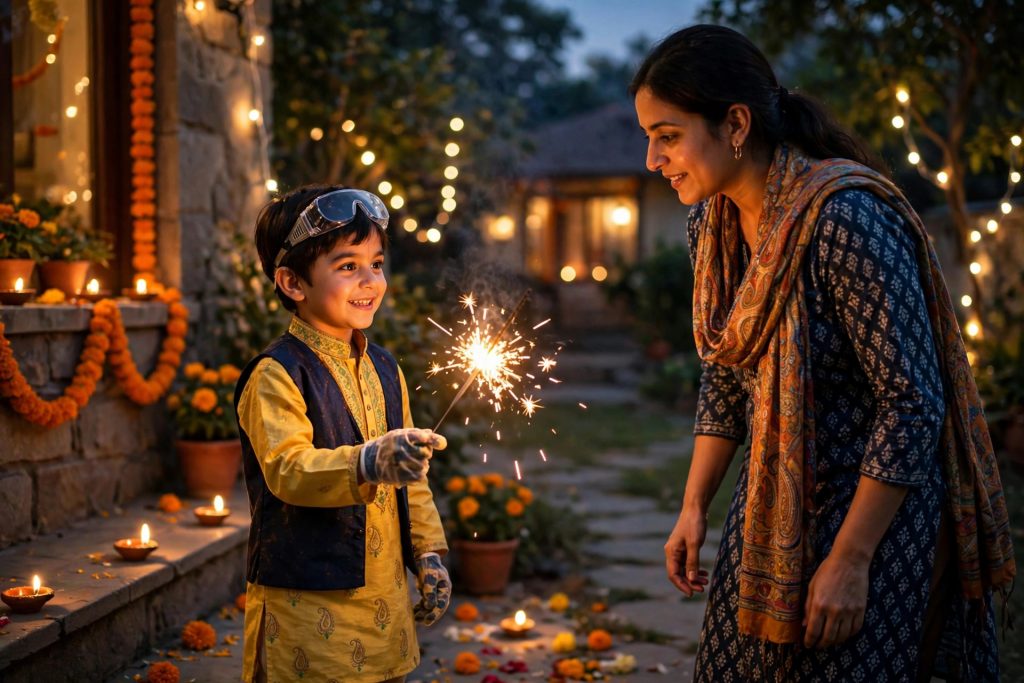
Supervise sparklers closely: Sparklers look harmless, but they burn at a very high temperature and can cause serious burns. Only older children should hold sparklers, one at a time, with an adult right beside them, wearing closed shoes and fitted clothes. Put used sparklers straight into a bucket of water.
Pets: A Calm Plan for the Noisiest Night of the Year
For pets, Diwali is not a celebration. It is a night of loud, unpredictable noise. A calm plan made in advance helps them cope.
- Create a safe room before the noise starts. Choose a quiet, interior room with a bed, water, and a familiar blanket. Close windows and curtains to muffle sound and block flashes of light.
- Stay with your pet if you can. A familiar person nearby is the best comfort. Do not force a hiding pet out of its hiding place. Let it choose where it feels safe.
- Do not take pets to cracker bursting areas. Even a calm dog can panic and bolt at a sudden bang. Keep cats indoors all evening.
- Use calming aids in advance if your vet has recommended them. Do not give human medicines to pets, and do not start a new calming product on Diwali night without veterinary advice.
- Keep sweets, chocolate, and diyas out of reach. Chocolate is toxic to dogs, and many Diwali sweets contain ingredients that are unsafe for pets. A knocked over diya is a burn and fire risk for a curious pet.
- Check on your pet after the noise ends. Offer water, a toilet break, and a quiet space to settle. If your pet is still shaking, panting, or hiding hours later, contact your vet.
Food, Kitchen and Guest Safety
A busy kitchen and a house full of guests add their own risks. Keep the kitchen calm, even when the house is not.
- Keep the kitchen clear of diyas and decorations. Cooking oil, gas flames, and paper decorations are a dangerous mix. Keep tea towels and curtains away from the stove.
- Never leave cooking unattended, especially deep frying. If oil starts to smoke, turn off the heat and cover the pan. Never pour water on hot oil.
- Keep hot food and drinks away from the edge of tables where children can reach them. Serve children in a separate, safe area if the main table is crowded.
- Label food for allergies and dietary needs. If you are hosting guests, check for nut allergies, diabetes, or other dietary needs in advance. For menu ideas, see our Diwali dinner menu ideas.
- Keep walkways clear for guests. Do not block corridors, stairs, or exits with decoration, shoes, or gift boxes. In an emergency, a clear exit matters more than a perfect decoration.
First Aid: What to Keep Ready Before Diwali
No one plans to need first aid on Diwali, but having it ready makes a small accident much less frightening.
Keep a kit ready and visible: A basic first aid kit should include clean gauze, bandages, antiseptic, burn gel or aloe vera gel, pain relief suitable for your family, and a phone with emergency numbers saved. Keep it in one place that every adult in the house knows.
For a minor burn: Cool the burn under cool, running water for at least 10 minutes. Do not apply toothpaste, butter, or ice directly to a burn. Cover it loosely with clean gauze and seek medical help if the burn is large, deep, on the face or hands, or if it blisters badly.
For smoke or breathing difficulty: Move the person to fresh air straight away. If breathing difficulty, chest pain, or confusion continues, call emergency services immediately. Do not wait to see if it improves on its own.
Know your numbers: Save local emergency numbers, your nearest hospital, and your family doctor in your phone before Diwali. In an emergency, you do not want to be searching for a number.
After Diwali: Cleanup That Keeps Everyone Safe
Safety does not end when the last cracker bursts. A careful cleanup the next morning prevents injuries that happen after the celebration.
- Soak all used crackers and sparklers in water before throwing them away. Even a cracker that looks spent can still be hot inside.
- Check for smouldering debris. Look in plant pots, under furniture, on balconies, and in garden beds for sparks or hot pieces that may have landed there.
- Clear the floor before children and pets walk around barefoot. Pick up sharp pieces, broken glass, and small metal parts that could cut feet or paws.
- Store unused crackers safely, or dispose of them according to local rules. Do not keep loose crackers in a drawer with other household items.
- Ventilate the house. Open windows to clear smoke and the smell of crackers, especially if anyone has asthma or breathing problems.
A Simple Diwali Safety Checklist to Print in Your Mind
If you remember nothing else, remember this list.
- Never leave a flame unattended, and extinguish diyas before bed.
- Keep a 30 cm clear zone around every diya, away from curtains and paper.
- Check fairy lights for damage, do not overload sockets, and switch lights off at night.
- Burst crackers only outdoors, in an open space, with water and sand nearby.
- Wear fitted clothes near flames, and keep children in fitted, cotton clothes.
- Keep pets indoors in a quiet room, with water and a familiar person nearby.
- Keep a first aid kit ready, and know your emergency numbers.
Frequently Asked Questions
Can I use real diyas if I have small children at home?
Yes, but keep real diyas out of reach, on high, stable surfaces, and never leave them unattended. For rooms where children play, use LED diyas instead. They look warm and festive without the fire risk.
Is it safe to leave fairy lights on all night?
No. Fairy lights should be switched off when you go to bed or leave the house. Even LED lights can develop a fault, and a timer plug is the easiest way to make sure they do not stay on all night.
What should I do with a cracker that does not burst?
Do not pick it up, do not try to relight it, and do not look closely at it. Wait at least 15 minutes, then pour water over it from a safe distance and dispose of it after it has soaked. Teach children to tell an adult straight away if they find a dud cracker.
How can I calm my dog during fireworks?
Create a quiet, interior room with a bed, water, and a familiar blanket. Close windows and curtains, stay nearby if you can, and do not force your dog out of hiding. If your dog is very anxious, talk to your vet before Diwali about calming options.
What is the first aid for a small burn?
Cool the burn under cool, running water for at least 10 minutes. Do not apply toothpaste, butter, or ice. Cover it loosely with clean gauze. Seek medical help if the burn is large, deep, on the face or hands, or if it blisters badly.
Are sparklers safe for children?
Sparklers burn at a very high temperature and can cause serious burns, so they are not safe for young children to hold on their own. Only older children should hold one sparkler at a time, with an adult right beside them, wearing closed shoes and fitted clothes, and used sparklers should go straight into a bucket of water.
Conclusion
Diwali is at its best when it is joyful and safe. The rules in this guide are not about spoiling the fun. They are about making sure everyone, including children, pets, guests, and neighbours, can enjoy the festival without fear.
Start with the golden rule, never leave a flame unattended, and build from there. Check your lights, choose an open space for crackers, dress safely, and keep a first aid kit ready. A little planning before Diwali gives you a calm, bright, and happy celebration. Happy Diwali, and stay safe.

2 Comments
Pingback: 12 DIY Diwali Lanterns and Jar Lights (2026): Paper Kandeel, Glass Jars and Safe LED Ideas
Pingback: 15 Easy Diwali Rangoli Designs for Home (2026): Simple Dot, Flower and Diya Patterns