

Introduction
No Christmas in India is complete without a plum cake. In Kerala, where the Christmas plum cake is most famous, families start soaking dry fruits weeks in advance, and the smell of caramel, cinnamon and baked fruit fills the house through December. In other parts of India, the plum cake has become a much loved festive bake too, shared with neighbours, packed into gift boxes and served with evening tea.
This Christmas plum cake recipe is written for Indian home kitchens. It covers the classic Kerala style cake with eggs, a fully eggless and alcohol free version, a quick last minute method for busy families, and practical tips on soaking, caramel, baking and storage. You do not need a fancy oven or imported ingredients. With a regular oven, or even a heavy kadhai on the stove, you can bake a moist, dark, richly spiced plum cake that tastes like it came from a good bakery.
1. What Makes a Plum Cake Special
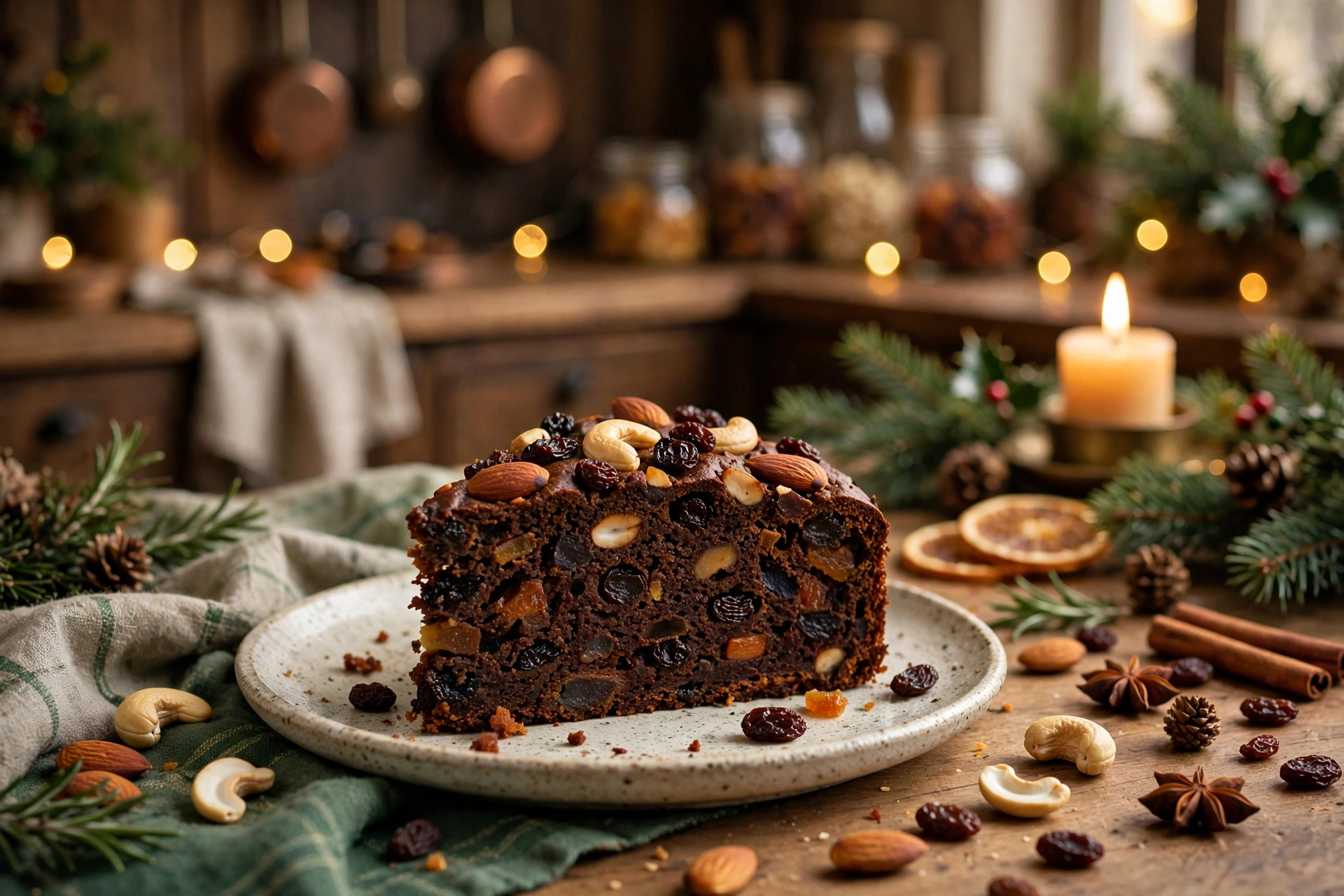
A plum cake, despite its name, rarely contains plums alone. It is a rich fruit cake made with a mix of dried fruits, such as raisins, dates, figs, cranberries and tutti frutti, plus nuts like cashews, almonds and walnuts, warm spices and a dark caramel syrup that gives the cake its deep brown colour and distinctive flavour. Traditionally, the fruits are soaked in rum for weeks or months, which keeps the cake moist and adds depth.
The Indian version of the plum cake has its own character. Local ingredients like cashews, jaggery and a spice mix of cinnamon, cardamom, clove and dry ginger give it a flavour that suits the Indian palate. Many Indian families now bake alcohol free versions, soaking the fruits in orange juice, grape juice or apple juice instead of rum, with equally delicious results.
2. Ingredients You Will Need
For one 8 inch cake, you will need the following. For the soaked fruits: 1 cup mixed dried fruits (raisins, sultanas, dates, figs, cranberries), 1/4 cup tutti frutti, 1/2 cup mixed nuts (cashews, almonds, walnuts), chopped, and 1/4 cup rum or orange juice for soaking. For the caramel: 1/2 cup sugar and 1/4 cup water. For the batter: 1 and 1/4 cups all purpose flour, 1 teaspoon baking powder, 1/2 teaspoon baking soda, 1/2 teaspoon each of cinnamon, nutmeg, cardamom and dry ginger powder, 1/4 teaspoon salt, 1/2 cup unsalted butter at room temperature, 3/4 cup powdered sugar or jaggery powder, 2 large eggs (or the eggless substitute below), 1 teaspoon vanilla extract and 1 teaspoon orange zest.
Keep all ingredients at room temperature before baking, and measure the flour carefully, because too much flour makes the cake dry. Sifting the flour with the spices and baking powder gives a lighter crumb.
3. Soaking the Fruits: The Secret to a Moist Cake
Soaking is the most important step, and it is also the simplest. Combine the dried fruits, tutti frutti and nuts in a clean glass jar, pour over the rum or orange juice, close the lid and leave it in a cool place. For the best flavour, soak for at least one week, shaking the jar gently every few days. Many Kerala families soak for a month or more, and the fruits only get better with time.
If you are short of time, use the quick soak method. Heat the juice in a pan, add the fruits and nuts, and simmer gently for 3 to 4 minutes until the fruits plump up. Cool completely before using. This quick method gives a very good cake, even if it is made on the same day. For an eggless cake, orange juice or grape juice works beautifully, and children can enjoy the cake too.
4. Making the Caramel Syrup
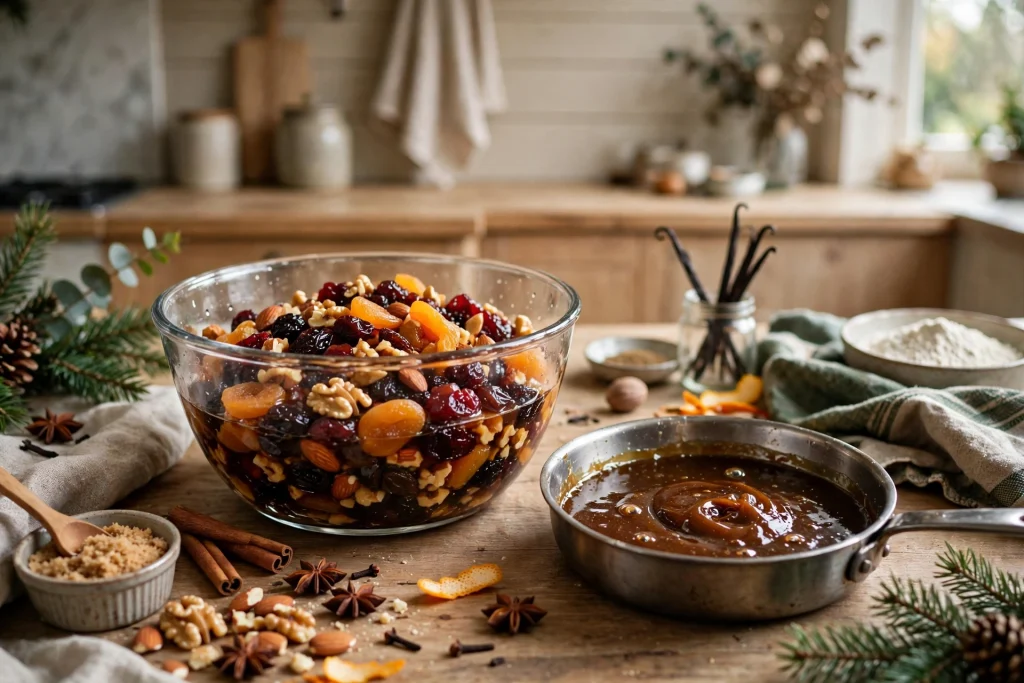
Caramel is what gives a plum cake its dark colour and rich, slightly bitter sweetness. Heat 1/2 cup sugar in a heavy pan on medium heat, without stirring, until it melts and turns a deep golden brown. This takes about 3 to 4 minutes. Switch off the heat, and carefully add 1/4 cup water, a little at a time, because the mixture will bubble vigorously. Stir on low heat for a few minutes until the caramel dissolves completely, then cool it.
Watch the caramel closely, because it can go from golden to burnt in seconds. If it burns, start again, because burnt caramel will make the whole cake bitter. A good caramel looks like dark honey and smells sweet and toasty. Let it cool fully before adding it to the batter.
5. Mixing and Baking the Cake, Step by Step
Preheat the oven to 160 to 170 degrees Celsius and line an 8 inch round tin with butter paper. Drain the soaked fruits, reserving any leftover liquid, and toss the fruits with 2 tablespoons of flour so they do not sink to the bottom of the cake. Cream the butter and powdered sugar together until light and fluffy, then beat in the eggs one at a time, followed by vanilla extract and orange zest.
Add the cooled caramel and the reserved soaking liquid, then fold in the sifted flour and spice mixture in two batches, mixing gently until just combined. Finally, fold in the floured fruits and nuts. Pour the batter into the tin, smooth the top, and sprinkle a few extra nuts on top. Bake for 50 to 60 minutes, until a skewer inserted in the centre comes out clean. If the top browns too fast, cover it loosely with foil for the last 15 minutes.
6. Eggless and No Alcohol Version
For a fully eggless, alcohol free plum cake, soak the fruits in orange juice or grape juice, and replace the two eggs with 1/2 cup thick curd plus 1/4 teaspoon baking soda, or use 2 tablespoons of flaxseed powder mixed with 6 tablespoons of water and rested for 10 minutes. The rest of the recipe stays the same.
Bake at the same temperature, but check the cake a few minutes earlier, because eggless cakes can bake slightly faster. The result is a moist, dark, beautifully spiced cake that everyone in the family can enjoy, including children and guests who avoid eggs or alcohol. Many readers tell us this version tastes just as rich as the classic cake, thanks to the caramel and the soaked fruits.
7. Baking Without an Oven: The Kadhai Method
If you do not have an oven, you can bake this plum cake on the stove. Place a layer of salt, about 1/2 cup, in a large heavy kadhai or pot, put a small stand or an inverted plate on top, cover with a tight lid and preheat on high flame for 10 minutes. Place the cake tin on the stand, cover again, and bake on low to medium flame for 50 to 60 minutes, checking with a skewer after 45 minutes.
Do not open the lid too often, because the trapped heat is what bakes the cake. This method works well in Indian kitchens and produces a cake with a lovely crust. Let the cake cool in the tin for 15 minutes before turning it out onto a wire rack.
8. Storage, Gifting and Serving Ideas
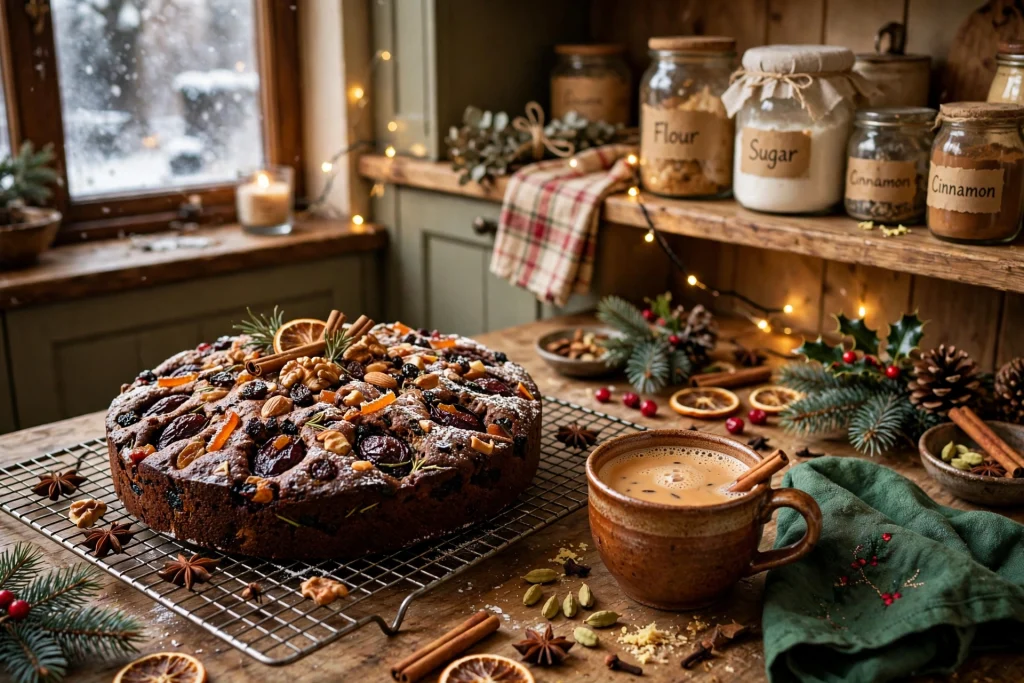
A plum cake keeps well, which is one reason it is such a good festive bake. At room temperature, in an airtight container, it stays fresh for about a week. In the refrigerator, it keeps for up to two weeks, and it can be frozen, well wrapped, for up to two months. In fact, the flavour improves after a day or two, as the spices and fruits settle into the crumb.
For gifting, wrap slices or a whole cake in butter paper and then in festive wrapping paper, and add a handwritten tag. For more festive sweets, see our homemade mithai recipes. Planning a full festive table? Our dinner menu ideas for guests and party snacks recipes pair well with this cake. Serve the cake slightly warm, on its own or with a cup of masala chai, filter coffee or hot chocolate. A thin slice with a scoop of vanilla ice cream makes a lovely Christmas dessert for guests.
9. Common Mistakes and How to Avoid Them
The most common mistake is under soaking the fruits, which leaves them dry and hard in the finished cake. Soak for at least overnight, or use the quick simmer method. Another mistake is over mixing the batter after adding flour, which makes the cake tough, so fold gently and stop as soon as the flour disappears.
Using too much baking soda gives a soapy taste, so measure it exactly. Opening the oven door repeatedly in the first 30 minutes can make the cake sink, so wait until the cake has risen and set before checking. Finally, always cool the caramel fully before adding it, because hot caramel can scramble the eggs and melt the butter.
FAQ
How long should I soak dry fruits for a Christmas plum cake?
For the best flavour, soak for at least one week, and up to a month if you have time. For a last minute cake, simmer the fruits in juice for 3 to 4 minutes and cool them completely, which gives a very good result on the same day.
Can I make a plum cake without eggs and without alcohol?
Yes. Soak the fruits in orange juice or grape juice instead of rum, and replace the eggs with thick curd or a flaxseed mixture. The caramel and spices give the eggless version the same rich flavour.
Can I bake a plum cake without an oven?
Yes. Bake it in a heavy kadhai or pot with a layer of salt and a stand inside, covered with a tight lid, on low to medium flame for 50 to 60 minutes. Check with a skewer after 45 minutes.
How long does a homemade plum cake last?
It lasts about a week at room temperature in an airtight container, up to two weeks in the refrigerator, and up to two months in the freezer when well wrapped. The flavour actually improves after a day or two.
Why did my fruits sink to the bottom of the cake?
Fruits sink when they are too heavy or the batter is too thin. Toss the drained fruits in 2 tablespoons of flour before folding them in, and make sure the batter is thick enough to hold them. Do not add extra liquid beyond the recipe.
Conclusion
A homemade Christmas plum cake is more than a recipe, it is a small December ritual. Soak the fruits, make the caramel, fill the house with the smell of cinnamon and baked fruit, and share the finished cake with family and neighbours. Whether you bake the classic Kerala version, the eggless and alcohol free cake, or the quick last minute method, the result is a moist, dark, generously fruited cake that tastes of Christmas itself. Bake one this December, wrap a few slices for friends, and start a tradition your family will look forward to every year.

8 Comments
Pingback: 12 DIY Christmas Wreath Ideas at Home in India (2026): Easy, Beautiful and Budget Friendly
Pingback: Christmas Cookies Recipe at Home in India (2026): Easy Eggless Cookies, Step by Step
Pingback: Christmas Table Decoration Ideas for Indian Homes (2026): 15 Stunning Looks
Pingback: Indian Christmas Menu (2026): Complete Dinner Ideas for Indian Homes
Pingback: Christmas Breakfast Ideas in India: 15 Easy Festive Recipes
Pingback: Christmas Dessert Recipes in India (2026): 15 Easy Homemade Desserts for the Holidays
Pingback: 12 Christmas Sweets Recipes in India (2026): Kuswar, Kulkuls, Rose Cookies and More
Pingback: Christmas Rum Cake Recipe in India (2026): Kerala Style Plum Cake with Soaked Fruits