

Introduction
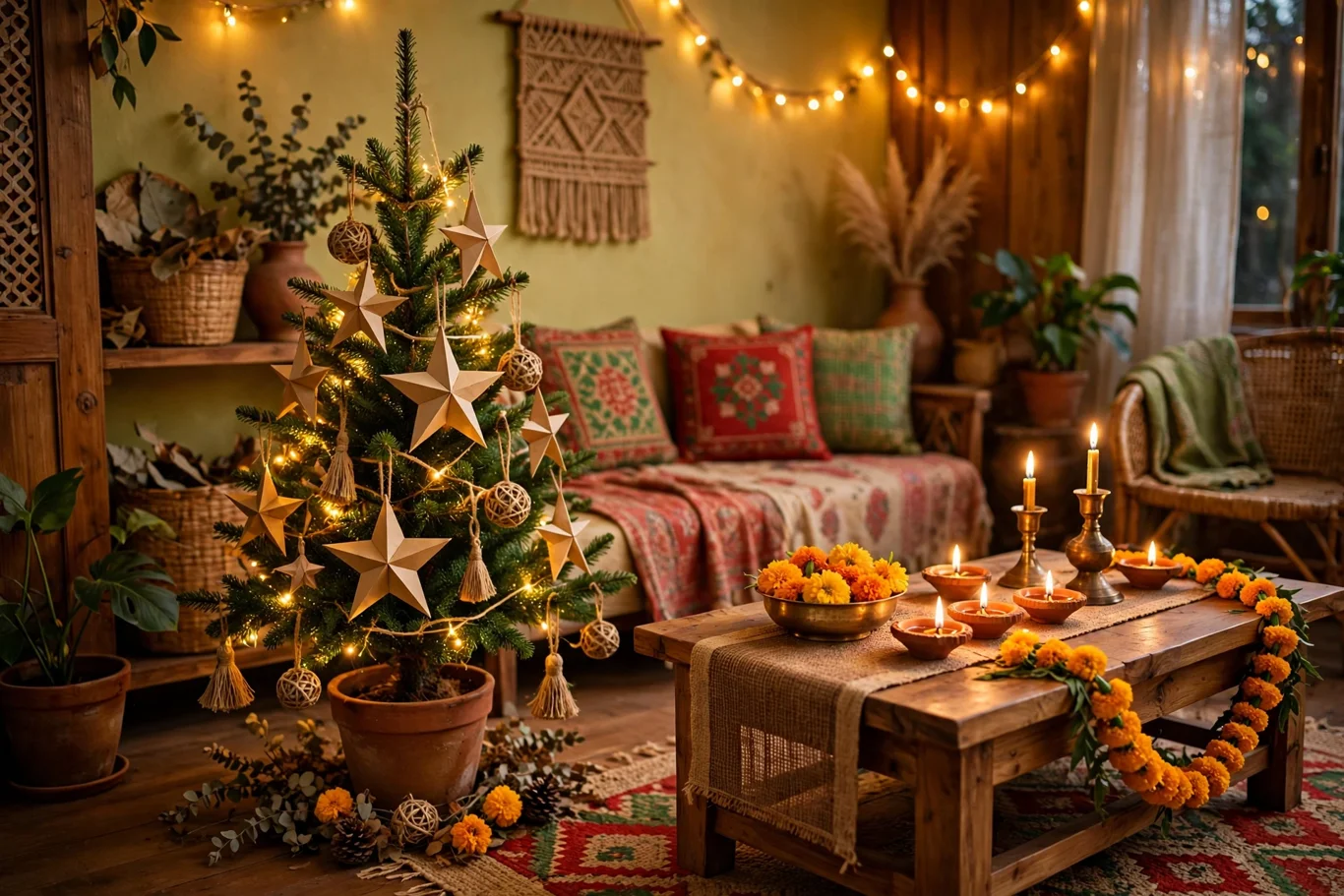
Christmas in India smells of marigold and fresh paint, not pine and snow. Yet every December, Indian homes fill up with plastic trees, glitter that never biodegrades, and tinsel that ends up in the bin on 26 December. There is a kinder way to celebrate, and it is also the prettier way. These eco friendly Christmas decoration ideas for Indian homes use materials you already own or can buy from a local artisan: clay, jute, paper, wood, coconut shell, and living plants.
Going green does not mean going plain. A terracotta diya glows warmer than a plastic candle. A hand-painted wooden star from Channapatna carries more character than a factory-made bauble. And when the season ends, most of these decorations can be composted, stored for next year, or gifted, instead of adding to a landfill.
This guide gives you 15 practical ideas with honest rupee costs, where to find the materials in India, and a simple two-week plan so nothing is left to a last-minute rush. Christmas falls on Friday, 25 December 2026, so the best time to start is the first week of December, while markets are full and online orders still arrive on time.
Why Choose Eco-Friendly Christmas Decorations
Before the ideas, here is why the switch matters. India celebrates Christmas in ever more homes every year, and the decor market grows with it. Most mass-market Christmas decor sold in India is single-use plastic: PVC trees, polystyrene snow, glitter made from microplastic, and tinsel that cannot be recycled. A household that decorates every year can easily throw away several kilos of plastic each season.
Eco-friendly decor solves three problems at once. It costs less, because many ideas reuse things already in your home. It looks more personal, because handmade pieces carry the marks of the maker. And it supports Indian artisans, from the potters who shape terracotta diyas to the weavers who turn banana bark into ornaments. If you buy one new thing this year, make it something made by hand in India, not something shipped in plastic from a factory.
You do not need to replace everything at once. Pick three or four ideas from this list, keep the good plastic pieces you already own and reuse them, and add one handmade piece each year. That is how a sustainable tradition grows.
1. A Living Potted Tree Instead of a Plastic One
The single greenest swap is the tree itself. Instead of buying a PVC tree, buy a small potted araucaria, juniper, cypress, or even a healthy money plant, and dress it up for the season. After Christmas, the plant moves to your balcony and keeps growing, so nothing is thrown away.
A potted araucaria in a 10-inch pot costs about Rs 300 to Rs 600 at a local nursery in most Indian cities. Decorate it with light paper ornaments and a short string of LED fairy lights, and keep the pot wrapped in jute cloth tied with a red ribbon. Water it lightly through December and keep it near a window, not in a dark corner, so it survives the festive season in good shape.
If you already own a plastic tree, do not throw it away. That would waste the plastic already made. Use it for as many years as it lasts, and make the rest of your decor eco-friendly instead. For more ideas on decorating the tree you already have, see our guide to homemade Christmas decoration ideas for Indian homes.
2. Clay Diyas as Christmas Candle Holders
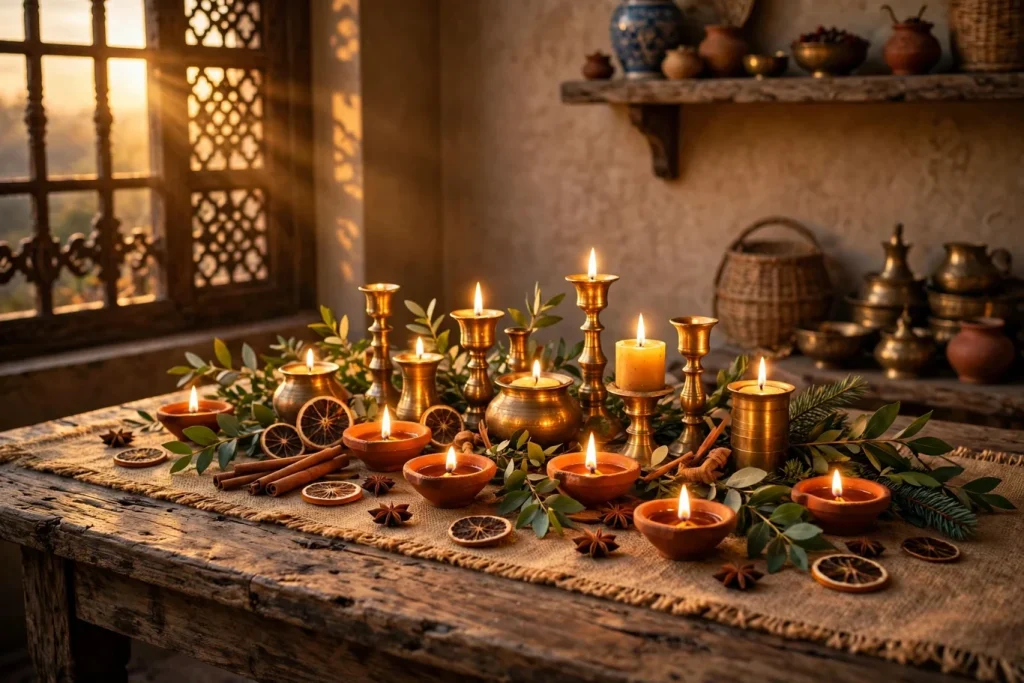
Terracotta diyas are the most Indian Christmas decoration there is, and they cost almost nothing. A set of 10 plain clay diyas sells for Rs 50 to Rs 100 in any local market. Paint them red, green, and gold with fabric paint, or leave them natural for a rustic look, then place a small tea light inside each one.
Line them along a windowsill, group five on a brass thali as a centrepiece, or place one beside every plate at the Christmas dinner table. Unlike paraffin candles in plastic holders, diyas are fully biodegradable and are made by local potters. Buy them from a potter or a street vendor rather than a supermarket pack, and the money stays in your neighbourhood.
Safety note: never leave a lit diya unattended, and keep diyas away from curtains, paper stars, and dried leaves. Use LED tea lights inside diyas placed near anything flammable.
3. Paper Stars Folded from Old Newspapers
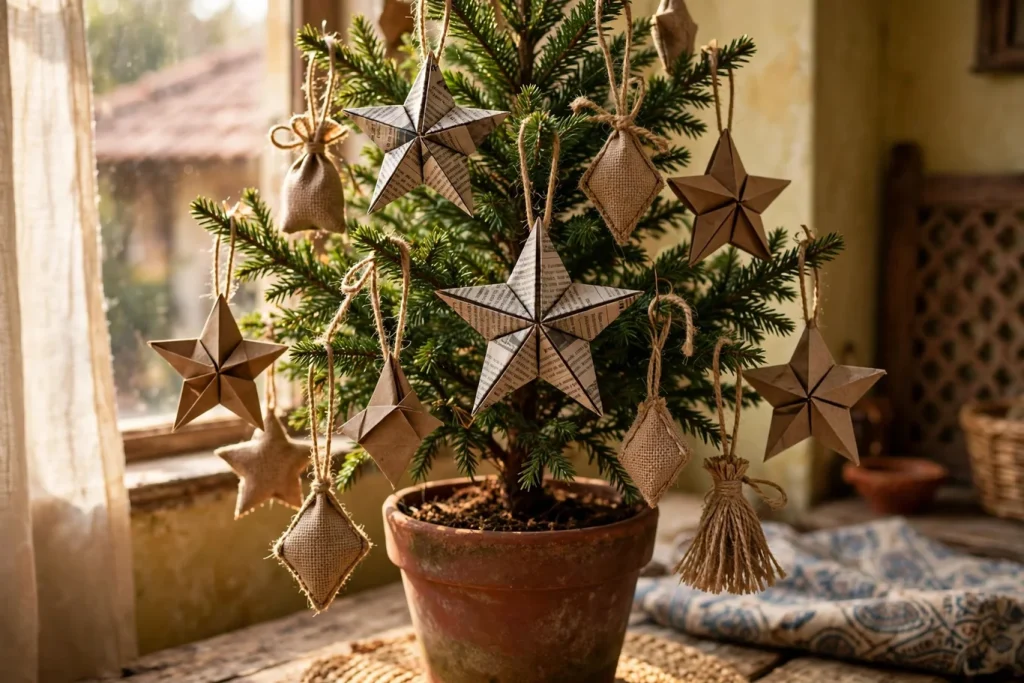
The giant paper star, or Christmas lantern, is a Goan and Keralite tradition, and it is also the cheapest decoration in this list. Old newspapers, brown kraft paper, or last year’s gift wrap can be folded into three-dimensional stars with no glue and no cost at all.
Cut the paper into strips, fold each strip into a star using any free video tutorial, and hang the finished stars from the ceiling at different heights using cotton thread. A cluster of five stars over the dining table looks like expensive Nordic decor and costs zero rupees. Children love this project, and it keeps a whole evening happily busy.
For a sturdier version, use chart paper or handmade paper from a stationery shop, which costs about Rs 20 to Rs 40 per sheet. Add a dab of gold paint on the tips, and the stars catch the fairy lights beautifully at night.
4. Jute and Burlap Ornaments
Jute is India’s most underrated Christmas material. It is cheap, strong, compostable, and it looks warm and rustic against green foliage. A metre of jute fabric costs about Rs 60 to Rs 120, and one metre makes a dozen ornaments.
Cut the jute into stars, hearts, and small stockings, stitch or glue the edges, and stuff them lightly with cotton waste or old cloth. Hang them on the tree with twine. You can also wrap jute ribbon around plain glass jars to turn them into candle holders, or use a jute table runner instead of a plastic one. Jute ribbon is sold in most craft shops and on Amazon India for about Rs 99 a roll.
Pair jute with wood and brass for a complete look. A jute star next to a brass bell and a wooden bead garland gives your tree a warm, handmade feel that no glitter bauble can match.
5. A Wreath Made from Real Greenery
A wreath made from fresh or dried greenery beats a plastic wreath every time, and it smells wonderful. Use what grows near you: mango leaves, money plant cuttings, ficus branches, eucalyptus if you can find it, or even curry leaves for a fragrant touch. Twist the branches into a circle, bind them with twine, and add dried orange slices, cinnamon sticks, and a few red berries or dried chillies for colour.
A homemade greenery wreath costs about Rs 100 to Rs 200 in materials, mostly the cinnamon and twine, since the leaves are free. Mist it lightly every morning so it stays fresh through Christmas week. When the season ends, compost the leaves and keep the twine and cinnamon for next year.
If you want step-by-step wreath instructions, our DIY Christmas wreath guide walks through the whole process with Indian materials.
6. Coconut Shell Bowls and Candle Holders
Every Indian kitchen throws away coconut shells. Turn them into Christmas decor instead. Saw a dried coconut shell in half, sand the edge smooth, and you have a rustic bowl for potpourri, a candle holder, or a tiny planter for a succulent. Paint the outside gold or red for a festive finish.
Coconut shell crafts are a speciality of Kerala and coastal Karnataka artisans, and finished coconut shell bowls sell for Rs 150 to Rs 300 online and at craft melas. If you make your own, the cost is zero, and the project takes about 20 minutes per shell. Fill a shell with dried orange slices, star anise, and cinnamon for a centrepiece that perfumes the whole room for free.
7. Wooden Ornaments from Indian Artisans
Channapatna wooden toys from Karnataka have a history of more than 300 years. The lacquered wooden stars, birds, and angels made by Channapatna artisans are beautiful, durable, and coloured with natural dyes. A set of small Channapatna Christmas ornaments costs about Rs 300 to Rs 600 online and at state emporiums like Cauvery and Kairali.
Other artisan options include hand-painted wooden baubles from Saharanpur, palm-leaf stars from Tamil Nadu, and banana bark reindeer from GreenKraft-style artisan groups in the south. Buying these pieces supports the makers directly, and unlike plastic baubles, wooden ornaments last for decades and only grow more charming with age.
When you shop, check that the piece is genuinely handmade. Machine-made wooden-look plastic is common in big markets, so buy from a state emporium, a craft mela, or a verified artisan brand.
8. LED Fairy Lights, Used Wisely
Fairy lights are the one place where new technology helps the planet. A string of LED fairy lights uses about 80 percent less electricity than old incandescent lights, and a good string lasts for years. If you already own old lights, keep using them until they fail. When you buy new ones, choose LED, and choose warm white for the most flattering glow.
In India, a 10-metre LED string costs about Rs 150 to Rs 300, and solar-powered strings are now available for balconies for about Rs 400. Drape lights inside old glass jars, wind them through a jute garland, or hang them behind sheer curtains for a soft glow. Put them on a timer plug, about Rs 250, so they switch off automatically at midnight and never burn electricity all night.
For detailed light placement ideas, room by room, see our Christmas fairy lights decoration guide for Indian homes.
9. Upcycled Glass Jar Luminaries
Every Indian home has empty glass jars: jam jars, pickle jars, Horlicks bottles, and coffee jars. Wash them, remove the labels with warm soapy water, and you have free lanterns. Frost the outside with a thin coat of white glue and salt for a snowy effect, wrap twine around the neck, and drop an LED tea light inside.
Group three jars of different heights on a windowsill or a side table. The effect is soft and magical, and the cost is zero. If you want colour, paint the inside of the jar with a thin wash of glass paint in red or green, about Rs 120 a bottle, which will last for years of jars.
Glass jars also make lovely gift packaging. Fill one with homemade Christmas sweets and tie a jute bow around it, and you have a present that needs no wrapping paper.
10. Dried Orange and Cinnamon Garlands
A garland of dried orange slices, cinnamon sticks, and star anise is the cheapest air freshener and one of the prettiest decorations you can make. Slice oranges thinly, dry them in a low oven or in strong winter sun for a day, then thread them on twine with cinnamon sticks and a few dried bay leaves.
Hang the garland across a doorway, along a staircase banister, or around a mirror. The materials cost about Rs 100 to Rs 150, mostly the oranges and cinnamon, and the garland perfumes the room gently for two weeks. After Christmas, compost the orange slices and keep the cinnamon for cooking.
This is a good project for a Sunday afternoon with children. They can thread the slices while you handle the oven, and the house smells of Christmas by evening.
11. Fabric Scraps as Bunting and Tree Skirts
Old cotton sarees, worn-out kurtas, and leftover fabric from the tailor can become Christmas bunting in an afternoon. Cut the fabric into triangles, stitch or glue them onto a cotton tape, and hang the bunting across a wall or along the balcony railing. Red and green prints work best, but any bright fabric looks festive against white walls.
A fabric tree skirt is even simpler. Cut a large circle from an old bedsheet or saree, cut a slit to the centre, and lay it under the tree. It hides the pot, catches fallen needles, and can be washed and reused every year. The cost is zero if you use fabric you already own, and about Rs 200 if you buy a metre of festive cotton print from a local cloth market.
12. A Clay and Terracotta Nativity Scene
A small nativity scene, or crib, made from terracotta is a beautiful Indian Christmas tradition, especially in Goa, Kerala, and Tamil Nadu. Local potters sell small terracotta figurines for Rs 100 to Rs 500 depending on size, and a complete small set costs far less than an imported plastic one.
Build the stable from cardboard, dried palm leaves, and twigs, add a bed of straw or dried grass, and place the figurines inside. Children can help arrange it, and the scene becomes a family tradition that grows by one figurine each year. After Christmas, wrap the figurines in newspaper and store them carefully, and they will last for decades.
13. Poinsettias and Living Plants as Decor
The poinsettia, with its bright red leaves, is the classic Christmas plant, and it grows easily in Indian winters. A small potted poinsettia costs about Rs 150 to Rs 300 at a nursery. Place one on each side of the main door, or use a single large plant as the centrepiece of the dining table.
Other good Christmas plants for Indian homes include orchids in white and red, anthuriums, and Christmas cactus. Unlike cut flowers, potted plants last well beyond Christmas and keep cleaning your indoor air. If you have a balcony garden, bring a few pots indoors for the festive week, then return them outside.
Water poinsettias sparingly and keep them away from cold draughts. With a little care, the same plant can be kept alive and brought out again next December.
14. Beeswax and Soy Candles Instead of Paraffin
Most cheap candles are made from paraffin, a petroleum product that releases soot when burned. Beeswax and soy candles burn cleaner, last longer, and smell naturally sweet. In India, a small beeswax candle costs about Rs 150 to Rs 300, and soy candles in glass jars sell for Rs 200 to Rs 500.
Place candles in your upcycled glass jars or coconut shell holders, and use them on the dining table during Christmas dinner. Always place candles on a stable, heatproof surface, keep them away from curtains and paper decorations, and never leave them burning in an empty room.
If you enjoy DIY, you can make your own soy candles at home with soy wax flakes, cotton wicks, and old jars. A kilo of soy wax costs about Rs 400 and makes roughly eight small candles, which also make lovely Christmas gifts.
15. Zero-Waste Gift Wrapping
The decoration does not stop at the tree. The way you wrap gifts is part of the decor, and it is also the easiest place to cut waste. Wrap presents in old newspaper with a jute bow, reuse last year’s gift bags, or use the Japanese furoshiki method: wrap the gift in a square of cloth that becomes part of the present.
Brown kraft paper, about Rs 50 a roll, looks elegant with a sprig of dried leaves tucked under the string. Old maps, children’s drawings, and pages from damaged books all make charming wrapping paper. Add a handwritten tag on a scrap of card, and the gift looks more thoughtful than any shop-bought wrapping.
Where to Buy Eco-Friendly Christmas Decor in India
If you prefer to buy rather than make, here is where to look. State emporiums like Cauvery (Karnataka), Kairali (Kerala), and Gurjari (Gujarat) sell authentic handmade pieces. Craft melas, especially Dilli Haat in Delhi and the Kala Ghoda festival in Mumbai, are full of artisan stalls in December. Online, look for Okhai, GreenKraft, House of Ekam, and Jaypore, all of which work directly with artisan groups.
For materials, your local market beats any website. Clay diyas come from the potter, jute from the cloth market, cinnamon and star anise from the spice shop, and plants from the nursery. Buying locally keeps the money in your city and cuts the packaging and transport waste of online orders.
A realistic budget for a fully eco-friendly Christmas look in a two-bedroom flat is Rs 1,500 to Rs 3,000, including a potted tree, lights, diyas, and materials for three or four DIY projects. Most families already own half of what they need.
Your Two-Week Eco Christmas Plan
Week one, from 11 to 17 December, is for planning and buying. Choose your three or four projects, buy the diyas, jute, paper, and plants, and order any artisan pieces online so they arrive in time. Start drying orange slices and folding paper stars in the evenings.
Week two, from 18 to 24 December, is for making and decorating. Build the wreath and garlands early in the week so they are fresh for Christmas Eve. Set up the tree and lights by 20 December. Make the nativity scene with the children on 23 December, and place the diyas and candles on Christmas Eve morning. On 26 December, compost what is compostable, store the rest carefully, and note down what worked, so next year is even easier.
Frequently Asked Questions
Are eco-friendly Christmas decorations more expensive than regular ones?
No, they are usually cheaper. Most ideas in this guide cost between zero and Rs 300 because they reuse materials you already own. A potted tree, clay diyas, paper stars, and jute ornaments together cost less than a single set of imported plastic baubles, and they last longer.
Where can I buy eco-friendly Christmas decorations in India?
State emporiums, craft melas like Dilli Haat, and artisan brands like Okhai and GreenKraft are the best sources. For materials, buy clay diyas from a local potter, jute from a cloth market, and plants from a nursery near your home.
How do I keep a potted Christmas tree alive after December?
Water it lightly, keep it near a bright window, and move it to the balcony after Christmas. An araucaria or juniper in a pot will grow slowly and can be decorated again next year, which is the whole point of choosing a living tree.
Is it safe to use diyas and candles with paper decorations?
Yes, if you keep them apart. Place lit diyas and candles on stable, heatproof surfaces, away from paper stars, dried leaves, and curtains. Near anything flammable, use LED tea lights instead of real flames, and never leave a flame burning in an empty room.
What is the easiest eco-friendly Christmas decoration for beginners?
Paper stars folded from old newspapers. They cost nothing, need no special skill, and look beautiful hung in a cluster. Clay diyas are the second easiest: buy them, paint them if you like, and place a tea light inside.
Conclusion
An eco-friendly Christmas is not a smaller Christmas. It is a warmer one, full of handmade pieces, local materials, and the smell of cinnamon and fresh leaves. Start with three or four ideas from this list: a potted tree, clay diyas, paper stars, and a jute garland will transform a room for less than Rs 1,000. Add one new handmade piece each year, keep what you already own in use, and buy from Indian artisans when you buy anything new. Your home will look beautiful, your conscience will be clear, and the planet will be a little lighter this Christmas.
