

Introduction
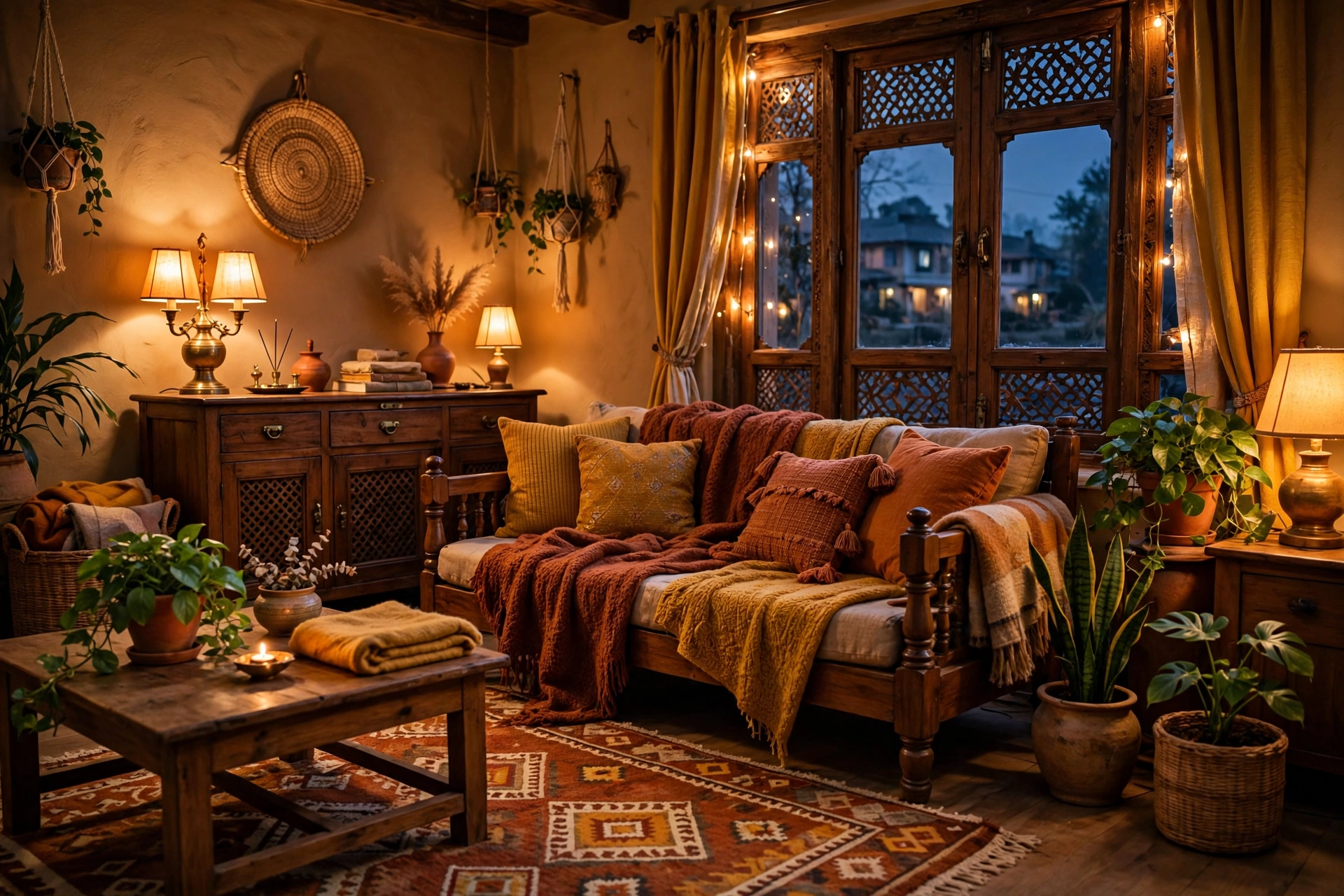
Winter in India is not the same in every city. In Delhi, the mornings are foggy and cold. In Mumbai, the air turns pleasantly cool. In Bengaluru, the evenings ask for a light shawl. In Jaipur and Lucknow, the nights can be sharp, while in Chennai, winter is mostly a softer, breezier season. A living room that works in one city may feel wrong in another, so winter decor in India is less about copying a foreign picture and more about adding warmth in a way that suits your climate, your home and your budget.
This guide brings together 15 winter living room decor ideas for Indian homes that are practical, affordable and easy to reverse in March. You will find ideas for layering fabrics, choosing warm colours, fixing lighting, using rugs and curtains, creating a chai corner, and styling small flats without crowding them. Competitor guides often list generic winter tips, or push expensive furniture, and they miss the Indian realities of dust, sunlight, joint families, and rooms that must work for guests, children and elders at the same time. This guide fills those gaps, with prices in rupees, local materials, and ideas that work in rented flats as well as owned houses.
1. Start With Warmth, Not With Shopping
Before buying anything, decide what feels cold in your living room. Is the floor cold underfoot in the morning? Does the room look pale and flat in the evening? Is the seating comfortable for long family evenings? Answering these questions stops wasteful shopping. A room that feels cold because of bare tiles needs a rug first, not new cushions. A room that feels dull needs warm lighting first, not a new sofa cover.
Walk through the room at three times of day: morning, late afternoon, and night. Notice where sunlight falls, where shadows sit, and where the family actually sits. Winter decor should follow real use, not a showroom layout. Keep a short list of three problems to fix, and spend on those first. This simple check is the difference between a room that looks wintery in a photo and a room that feels warm every evening.
2. Layer Throws, Cushions and Blankets
Layering is the fastest way to make a living room feel like winter. Add a soft throw over the arm of the sofa, fold a light quilt or razai at one end, and swap thin summer cushion covers for thicker ones in wool, velvet, cotton knit, or faux fur. Choose two main colours and one accent, for example cream and rust with a touch of mustard, or beige and olive with a touch of deep red.
Do not cover every seat with heavy fabric. One throw and three or four cushions on a three seater sofa are enough. In a joint family home, keep a basket of extra throws near the sofa so guests and elders can help themselves on cold evenings. Wash covers before the season starts, and air blankets in morning sunlight to remove any stored smell. Layering works because it adds texture, and texture is what the eye reads as warmth.
3. Switch to Warm Lighting
Lighting changes the mood of a room more than any decoration. In winter, replace harsh white tube lights with warm white bulbs where you can, and add table lamps, floor lamps, or a warm lamp shade in the main seating area. A single warm lamp beside the sofa can make the whole corner feel cosy, even if the rest of the room stays simple.
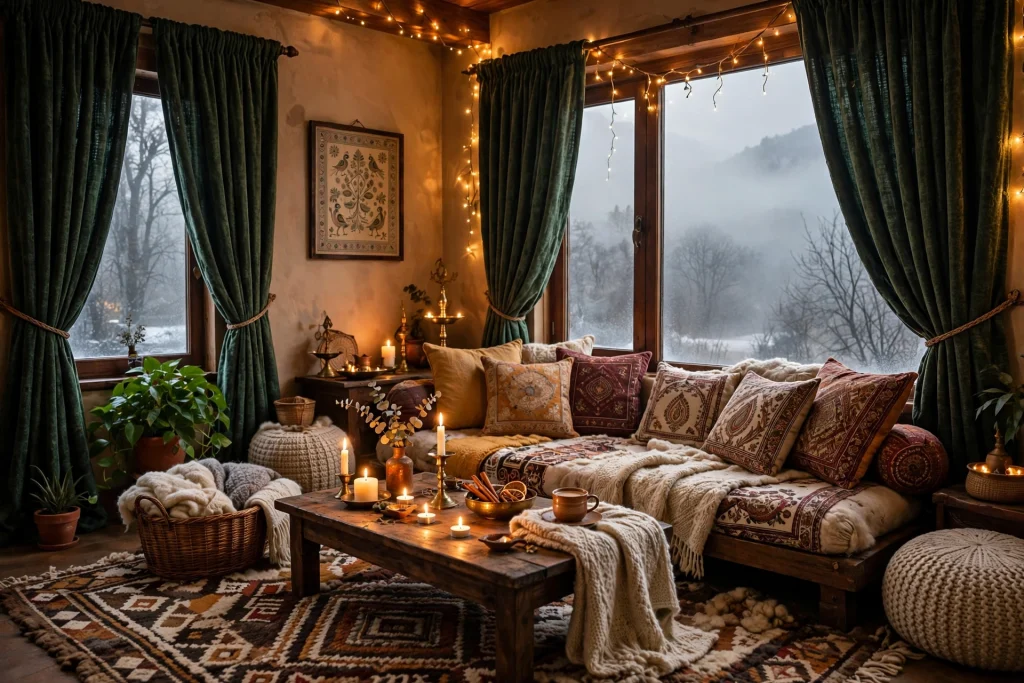
Fairy lights are not only for festivals. A string of warm white fairy lights along a curtain rod, a bookshelf, or a balcony door adds a soft glow that suits winter evenings. Keep them away from curtains that touch the bulbs, and use LED lights that stay cool. Candles in glass holders, or LED candles if you have children or pets, add a flickering warmth for dinner and family time. The goal is layered light: a main light, a lamp, and a small glow, not one bright light from the ceiling.
4. Add a Rug for Warmth Underfoot
Indian homes often have tile or marble floors, which feel cold in December and January, especially in North India. A rug solves this at once. Choose a thick cotton, wool, or woollen blend rug that covers the main seating area, with the front legs of the sofa and chairs on the rug so the arrangement looks grounded.
For small flats, a 5 by 7 feet rug is usually enough for the sofa zone. For larger living rooms, an 8 by 10 feet rug anchors the room better. Pick a pattern that hides dust and footprints, such as a bordered or lightly patterned design in warm tones. In homes with elders, choose a low pile rug that does not trip, and use a non slip mat under it. A rug also reduces echo, so the room feels quieter and more comfortable for conversation.
5. Use Thick Curtains and Draft Stoppers
Thin summer curtains let cold air in and warm air out, especially at night. Swap them for thicker cotton, velvet, or lined curtains in winter. You do not need to replace every curtain in the house. Start with the living room windows that face the wind, and keep the curtains closed after sunset.
During the day, open the curtains wide from late morning to early afternoon, when winter sunlight is strongest. This free heat warms the room and keeps dampness away, which matters in Delhi winters and in humid coastal cities alike. At night, close them fully. For doors that face a balcony or a corridor, a simple draft stopper, a rolled towel, or a fabric door snake blocks cold air and dust. These small changes cost very little, but they make the room noticeably warmer.
6. Choose Warm Winter Colours
Winter colours in India are rich and earthy. Rust, mustard, olive, deep maroon, chocolate brown, and warm beige all suit Indian wood, brass, and handloom fabrics. You do not need to repaint the room. Add colour through cushion covers, a throw, a rug, a table runner, or a set of curtains.
If your sofa is grey, beige, or brown, rust and mustard cushions will lift it at once. If your sofa is already colourful, use cream and brown to balance it. Avoid using too many strong colours together, because the room can start to look busy. One wall can carry a piece of art, a woven hanging, or a framed family photo in warm tones. Colour should feel like a warm blanket, not a loud announcement.
7. Create a Chai and Reading Corner
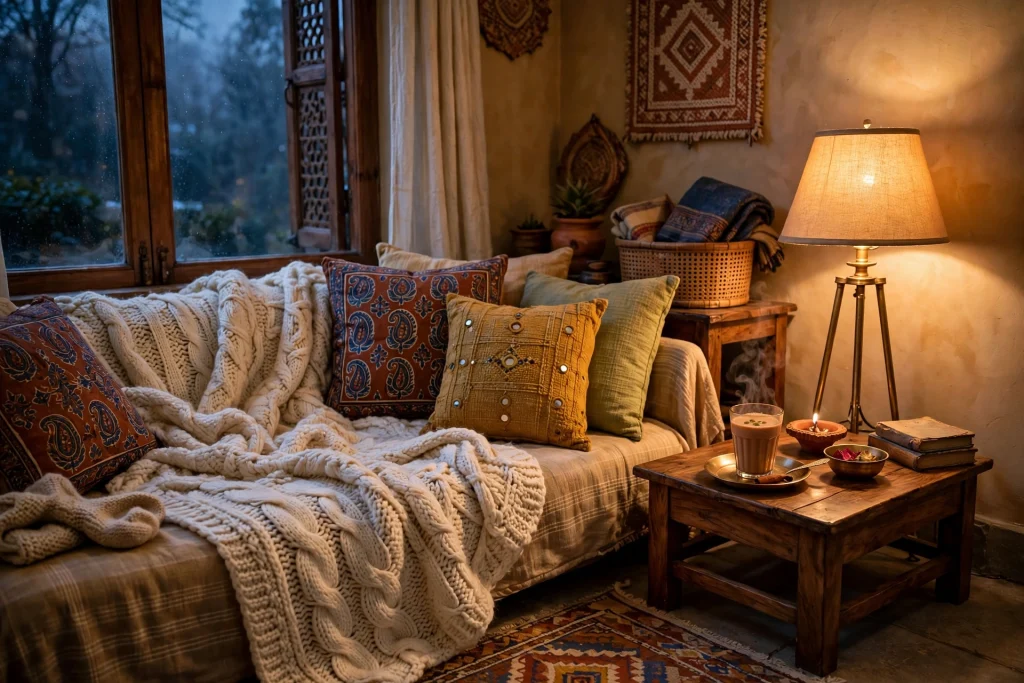
Winter evenings in India belong to chai, coffee, and long conversations. Create a small corner for this ritual, even in a small flat. Place a comfortable chair or a floor cushion near a window or a lamp, add a small side table, and keep a tray with cups, a kettle, or a thermos nearby. A bookshelf, a magazine basket, or a plant completes the corner.
This corner does not need new furniture. Move an existing chair, add a throw, and place a lamp behind it so the light falls over your shoulder while reading. In the morning, the same corner becomes a sunlight spot for elders. In the evening, it becomes the place where the family gathers for chai. A dedicated corner makes winter feel intentional, not just cold.
8. Bring in Wood, Brass and Natural Textures
Winter decor feels richer when natural materials are present. A wooden tray on the coffee table, a brass urli with floating flowers or candles, a cane basket for throws, or a jute runner on a side table all add warmth without effort. Indian homes already own many of these items, so look in your own cupboards before shopping.
Avoid plastic heavy decor that looks cold to the touch. A brass diya stand, a wooden photo frame, or a terracotta pot with a winter plant like chrysanthemum or poinsettia brings life to the room. Keep surfaces uncluttered, with one or two hero pieces per table. Natural textures also photograph beautifully, which helps if you like to share home photos with family.
9. Style the Coffee Table for Winter Evenings
The coffee table is the centre of winter family time. Style it for use, not just for looks. Place a tray with a candle or LED candle, a small plant, and space for cups. Add a stack of two or three books or magazines, and keep a coaster set ready. A table runner in a warm colour protects the surface and adds pattern.
Change the table with the season, not every week. In December, add a small bowl of oranges, dry fruits, or peanuts, which are winter staples in Indian homes and double as snacks for guests. Keep remote controls, chargers, and medicines in a small basket nearby, so the table stays tidy. A coffee table that invites people to sit, sip, and talk is doing its winter job well.
10. Decorate for Small Flats Without Crowding
Small flats need winter warmth without losing walking space. Use vertical decor: hang lights, wall art, or a woven hanging, rather than adding floor items. Choose a rug that fits under the sofa, not one that covers the whole floor. Use cushions and throws, which add warmth without taking floor space.
Foldable stools, nesting tables, and a wall mounted shelf help in a small living room. Keep one clear path from the door to the balcony, and do not block heaters or fans with heavy furniture. If you have a balcony, a winter chair and a small plant there extend the living room on sunny days. Small space winter decor is about choosing fewer, warmer pieces, and letting light and texture do the work.
11. Add Seasonal Greenery That Suits Indian Winters
Winter plants in India are cheerful and easy. Chrysanthemums in red, yellow, and white, marigolds that last into December, money plants, snake plants, and poinsettias all suit living rooms. Place one large plant near a window and two small plants on side tables or shelves.
Water less in winter, and keep plants away from heaters. If you have pets or small children, avoid plants that are unsafe if chewed, and place them higher. A plant in a brass or terracotta pot looks warmer than a plastic pot. For more fragrance ideas for the home, see our guide to home fragrance for Indian homes (https://homefestideas.com/home-decor/diwali-home-fragrance-ideas-indian-homes-2026/). Greenery keeps the room alive when the outside world looks dry and grey, and it improves the air in a closed winter room.
12. Prepare the Room for Guests and Festivals
Winter in India is also wedding season and Christmas season, so the living room must be ready for guests at short notice. Keep extra seating that folds away, extra cushion covers that match, and a clean guest tray with glasses and snacks. A beautiful entrance mat and a fresh fragrance at the door make the first impression warm.
For Christmas, you do not need to redecorate the whole living room. Add a small tree or a tabletop tree, a few ornaments, and warm lights, and the room is festive. Our Christmas tree decoration guide (https://homefestideas.com/diy-projects/diy-christmas-tree-decoration-ideas-home-india-2026/) has budget ideas that work in Indian homes. For a balcony that needs festive styling, plan it separately so the living room stays calm and the balcony carries the party mood. See also our Diwali staircase decoration ideas (https://homefestideas.com/holiday-decor/diwali-staircase-decoration-ideas-indian-homes-2026/).
13. A Simple Budget Plan
Winter decor does not need a big budget. A practical plan for a standard Indian living room is: Rs 1,500 to Rs 3,000 for a rug, Rs 800 to Rs 2,000 for cushion covers and a throw, Rs 500 to Rs 1,500 for warm bulbs and fairy lights, and Rs 500 to Rs 1,000 for curtains or a draft stopper, if needed. Total: roughly Rs 3,000 to Rs 7,500 for a full refresh.
Buy in stages. Start with lighting and throws, then add a rug, then curtains. Reuse Diwali lights, brass items, and throws from last year. Shop at local markets for cushion covers, because they offer more fabric choice at lower prices than many online stores. Keep receipts and washable covers, so the same items can be stored and reused next winter.
14. Care, Cleaning and Storage Tips
Winter fabrics collect dust, especially in North Indian cities. Vacuum rugs twice a week, shake cushion covers outdoors, and wipe wooden surfaces with a dry cloth. Air the room in the morning sunlight, even on cold days, for at least 30 minutes, to reduce dampness and smell.
In March, wash and dry all winter covers fully before storing them in cotton bags with neem leaves or silica gel. Label the bags, so next winter setup takes an hour, not a weekend. Clean lamps and fairy lights before storing them, and check wires for damage. Good storage protects your investment and keeps the next winter refresh simple and cheap.
FAQ
How can I make my living room warm in winter without a heater?
Use layered fabrics, a thick rug, thick curtains, and warm lighting. Close curtains after sunset, block drafts at doors, and let sunlight in during the day. These steps together make a room feel warmer even without a heater, and they cost far less to run.
What colours work best for winter living room decor in India?
Rust, mustard, olive, maroon, chocolate brown, and warm beige work best. They suit Indian wood, brass, and handloom fabrics, and they look warm under yellow light. Use two main colours and one accent, and avoid mixing too many strong colours in one room.
Is a rug necessary for winter in Indian homes?
In North India and in homes with tile or marble floors, yes, a rug makes a big difference to comfort. In warmer coastal cities, a lighter cotton rug still helps the room look grounded and cosy, even if the cold is mild. Choose a low pile rug in homes with elders.
How do I decorate a small flat for winter without crowding it?
Use vertical decor, a correctly sized rug, cushions and throws, and warm lamps. Avoid large floor items, keep walking paths clear, and use foldable seating for guests. Fewer, warmer pieces work better than many decorations in a small space.
When should I change my living room decor for winter?
Start in late November in North India, and in early December in most other parts of India. Change curtains, cushion covers, and lighting first, then add a rug and throws as nights get colder. Reverse the changes in March when days turn warm.
Conclusion
A warm winter living room in India is not about expensive furniture or imported decor. It is about layering soft fabrics, choosing warm light, adding a rug underfoot, closing drafts, and creating a corner where the family wants to sit with chai in the evening. Start with the three problems that bother you most, spend in stages, and reuse what you already own. With these 15 ideas, your living room can feel cosy, welcoming, and ready for guests through the whole winter, from the first foggy morning to the last cool evening in February.

1 Comment
Pingback: Christmas Staircase Decoration Ideas in India (2026): 15 Festive Ways to Dress Up Your Stairs