

Introduction
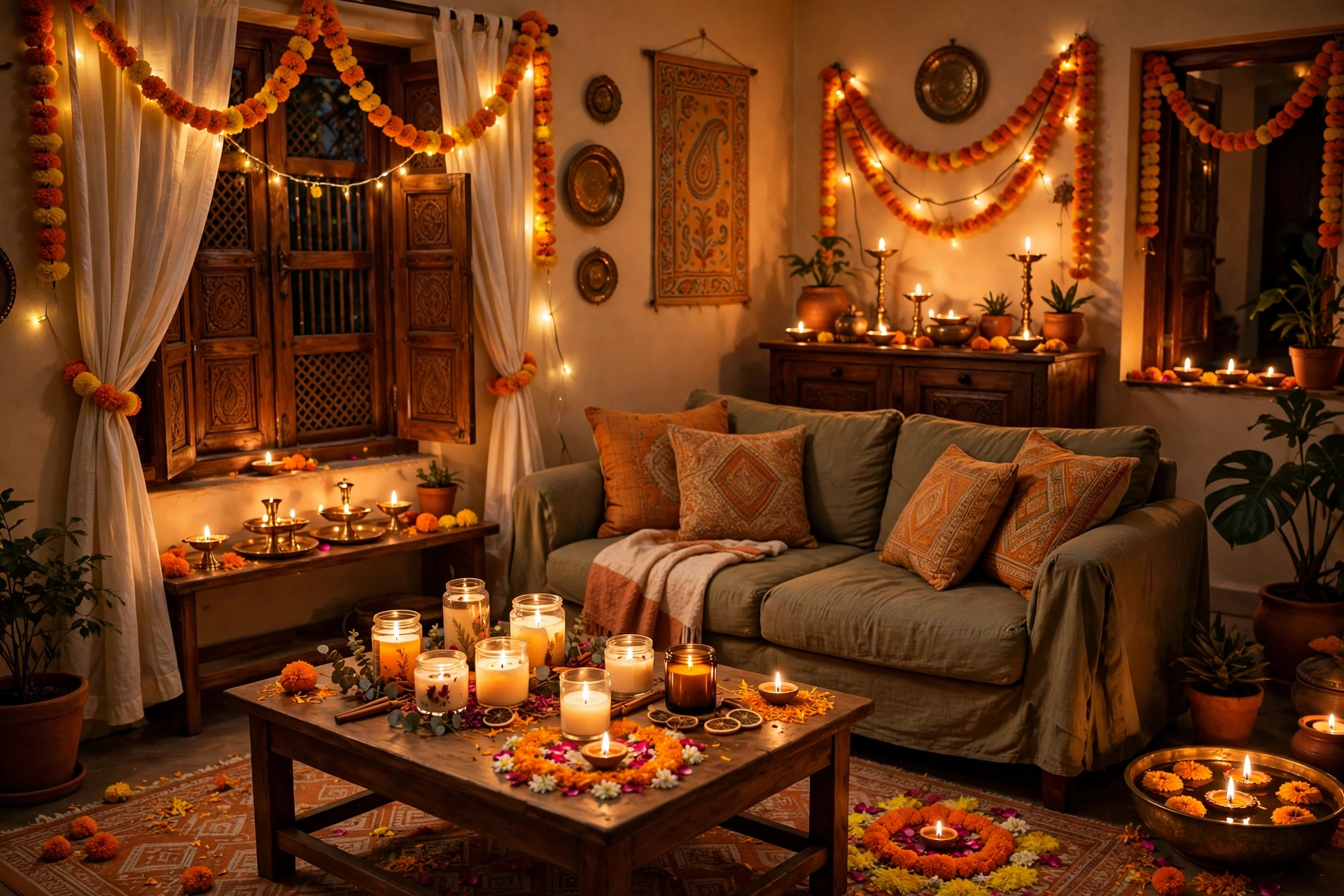
Walk into a home on Diwali evening and the first thing you notice, even before the lights, is the fragrance. It is a mix of marigold at the door, incense from the pooja room, ghee diyas in the courtyard and something sweet from the kitchen. That scent tells guests they have arrived at a celebration, and it tells the family that the festival has truly begun.
Good diwali home fragrance ideas are not about one strong air freshener. They are about layering gentle scents room by room, so each space has its own character without clashing with the next. This guide shows how to do that with traditional Indian notes, modern options and practical safety tips, for homes of every size and budget.
Whether you love classic sandalwood and mogra, or you prefer scented candles and diffusers, you can build a Diwali fragrance plan that feels festive, welcoming and calm, not overpowering.
Why Scent Matters So Much at Diwali
Scent is closely linked to memory. For many Indians, the smell of incense or jasmine instantly brings back childhood Diwalis, grandparents’ homes and family pujas. That is why fragrance is such a powerful part of festive decoration. Lights can be seen and sweets can be tasted, but scent fills the whole house at once.
A thoughtful fragrance plan also helps during a busy festival week. Guests arrive at different times, cooking smells drift from the kitchen, and diyas add their own warm note. Layering scents gives the home a consistent festive base, so no single room smells flat or too sharp.
The goal is balance. One hero scent per room, supported by a softer background note, works better than five strong fragrances competing in a small flat. Start light, then add more only if the room still feels dull.
Traditional Indian Fragrance Notes Explained
Traditional Diwali fragrance comes from natural materials that Indian homes have used for generations. Each note has a mood, and knowing them helps you choose wisely.
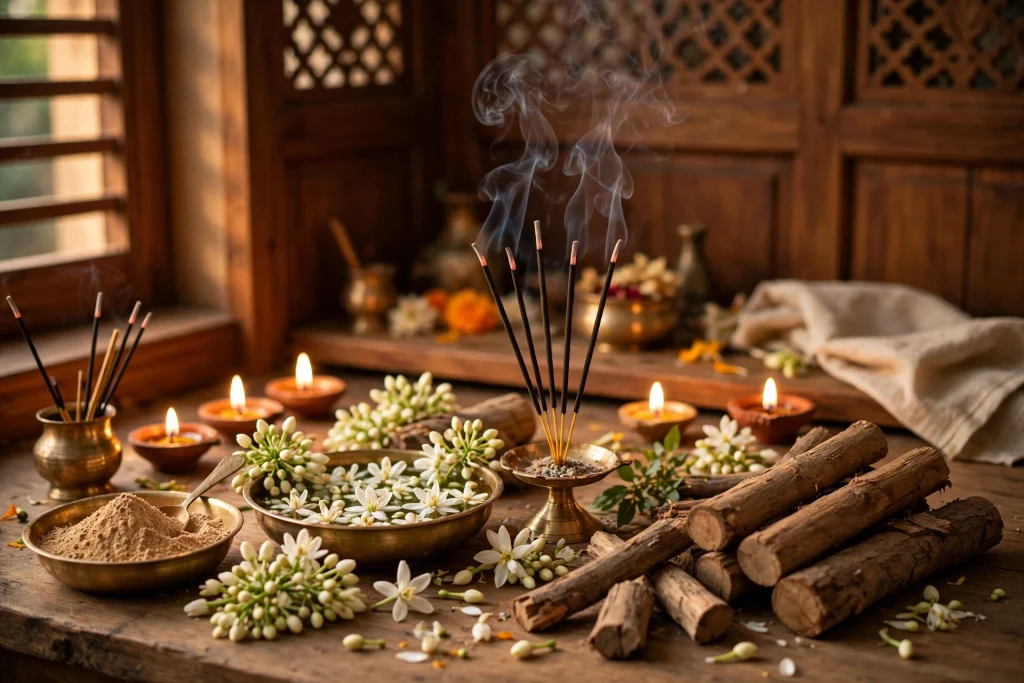
Sandalwood is warm, woody and calming. It suits the pooja room and the living room, especially in incense, paste or oil form. Mogra, or jasmine, is sweet, fresh and intensely floral. A small bowl of mogra near the entrance or in the bedroom feels luxurious without any effort. Rose is soft and romantic, and works well in the living room and dining area, through fresh flowers, rose water or potpourri.
Marigold is the classic Diwali flower. Its scent is earthy and slightly sharp, which is why it works best at the entrance and on balconies, where fresh air softens it. Camphor and loban add a clean, temple-like note for puja time, but they should be used briefly and in ventilated spaces. Ghee diyas add a warm, nutty background scent that many people associate with Diwali itself.
If you want a traditional base for the whole home, combine sandalwood in the pooja room, marigold at the entrance and mogra in the living spaces. That trio covers the festival without needing any modern product at all.
Scent Layering Room by Room
Room by room planning is the simplest way to avoid scent clashes. Give each room one main note and keep the strength gentle.
At the entrance, use fresh flowers first. A marigold toran, a bowl of rose petals with water, or a mogra garland on the door creates an immediate welcome. Add a diya or two, and the entrance will smell festive before guests step inside.
In the living room, choose a warm, social scent. Sandalwood incense before guests arrive, followed by a scented candle in vanilla, rose or oud, keeps the room inviting for hours. Keep the candle away from curtains and diyas, and light it only when people are present.
In the pooja room, keep fragrance sacred and simple. Sandalwood incense, fresh flowers and a ghee diya are enough. Avoid strong synthetic sprays here, because they can clash with the natural puja scent and distract from prayer. Our guide to Diwali Pooja Room Decoration Ideas 2026 pairs well with this approach, since it focuses on a clean, serene prayer space.
In the dining area, keep scent light and food friendly. Fresh flowers, a bowl of citrus and cloves, or a mild candle lit before the meal works well. Avoid heavy incense during meals, because it can overpower food aromas and bother guests.
In the bedroom, use calm scents for the evening. Lavender, mogra or a soft rose diffuser helps the room feel restful after a busy day. Place the diffuser away from the bed and bedding, and switch it off before sleeping.
On the balcony, let nature help. Marigold garlands, diyas and a citronella candle, if mosquitoes are a problem, create an outdoor festive corner. Fresh air will carry the scent gently, so you can be a little more generous here than indoors.
Modern Options: Candles, Diffusers and Potpourri
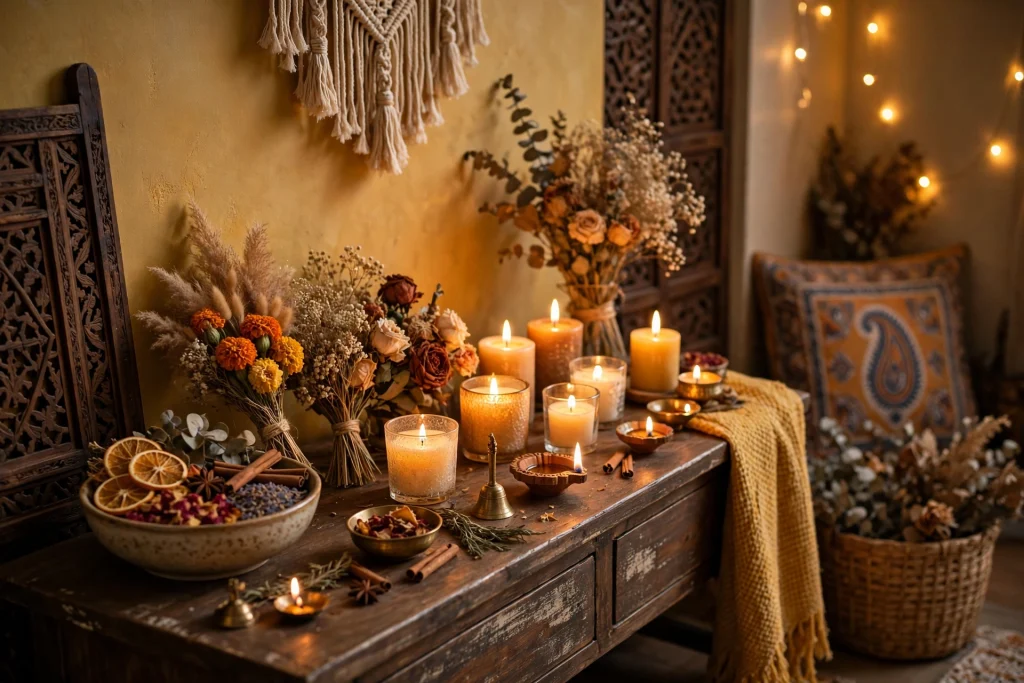
Modern fragrance products make Diwali scenting easier, especially in apartments where open flames need care. Scented candles are the most popular choice. Choose soy or beeswax candles in warm scents such as sandalwood, vanilla, rose or cinnamon, and place them in safe holders on stable surfaces.
Reed diffusers are ideal for rooms where you want continuous, flame-free fragrance. They work well in bedrooms, bathrooms and small living rooms. Turn the reeds once a day during Diwali week for a fresh boost, and keep the bottle away from direct sunlight.
Electric diffusers with essential oils offer control. A few drops of sandalwood, jasmine, rose or lemongrass oil in water can scent a room in minutes. Use them for 30 to 60 minutes at a time, then switch off, rather than running them all day.
Potpourri is a beautiful, low effort option. Mix dried rose petals, orange slices, cinnamon sticks, cloves and star anise in a bowl, add a few drops of essential oil, and place it on a console or dining table. It looks like decoration and smells like the festival, which makes it perfect for Diwali corners. For the wider living room look, Diwali Living Room Decoration Ideas for Indian Homes 2026 shows how scented corners fit into the full festive styling.
Budget and Premium Fragrance Plans
You do not need an expensive haul to make your home smell wonderful for Diwali. A budget plan can rely almost entirely on natural materials.
For under a modest budget, buy marigold garlands, a few mogra strings, incense sticks, camphor for puja, and ghee for diyas. Add a homemade potpourri bowl from dried flowers and kitchen spices. This combination costs little and smells unmistakably festive.
A mid-range plan adds one or two good scented candles, a reed diffuser for the bedroom, and a small essential oil set for an electric diffuser. Choose one signature scent for the living room and keep the rest of the home traditional, so the modern products enhance rather than replace the classic notes.
A premium plan can include hand-poured candles, a brass diffuser, fresh flower arrangements refreshed every two days, and a signature home fragrance for the entrance. Even at this level, restraint matters. Two or three quality products, placed well, will outperform ten strong sprays.
What Not to Mix: Common Fragrance Mistakes
The most common Diwali fragrance mistake is mixing too many strong scents in one room. Incense, a scented candle, a room spray and potpourri together can create a headache rather than a celebration. Pick one hero scent per room and let the others stay in the background.
Avoid spraying air freshener directly onto fabric, diyas or food areas. Sprays can stain, react with heat and leave a chemical note that clashes with natural flowers. Avoid very sweet or artificial scents in the pooja room and dining area, where they compete with prayer and food.
Do not mix camphor or loban with strong synthetic fragrances in a closed room. The combination can irritate eyes and throats, especially for children, elderly family members and guests with asthma. Ventilate well after puja, and keep the room airy before guests arrive.
Finally, avoid placing scented products near open flames. Candles, diffusers and potpourri should stay away from diyas, curtains and paper decorations. Fragrance should make the home safer and calmer, not add a new risk.
Safety with Kids, Pets and Open Flames
Diwali fragrance must be safe for every member of the household, including children and pets. Keep candles and diyas out of reach, on stable surfaces, and never leave them burning unattended. Use flameless candles or reed diffusers in children’s rooms and in corridors where pets pass.
Some essential oils are not safe for pets, especially cats and small dogs. Avoid diffusing tea tree, strong citrus oils or heavy synthetic blends around pets, and keep the room ventilated. If a pet shows sneezing, restlessness or avoidance, switch the diffuser off and open a window.
For children, prefer natural, mild scents such as rose, mogra and sandalwood, and avoid strong incense in their bedrooms. Keep matches, lighters and oil bottles stored safely, and teach older children to stay away from diya flames. If you are making your own diyas or lanterns for the week, the safety notes in DIY Diya Decoration Ideas for Diwali 2026 are worth reading alongside this guide.
Day and Evening Fragrance Routine
A simple routine keeps the home fragrant all day without constant effort. In the morning, open windows for fresh air, replace wilted flowers, and light incense briefly during morning puja. Place fresh potpourri or flower bowls in the living room and entrance.
In the afternoon, refresh the entrance flowers, turn reed diffusers, and prepare candles for the evening. Avoid heavy fragrance during cooking hours, so kitchen aromas stay pleasant.
In the evening, light diyas first, then incense in the pooja room, then candles in the living room. This order builds the festive scent gradually, like lights coming on one by one. After guests leave, extinguish candles and diyas safely, ventilate the rooms, and let the soft flower scent remain overnight.
Frequently Asked Questions
Which fragrance is best for Diwali at home?
Sandalwood, mogra, rose and marigold are the classic Diwali choices. Sandalwood suits the pooja room, mogra and rose suit living spaces, and marigold works best at the entrance and balcony. Choose one hero scent per room for the best balance.
How can I make my home smell good for Diwali without candles?
Use fresh flowers, incense, potpourri, reed diffusers and an electric diffuser with essential oils. A bowl of rose petals, dried orange slices, cinnamon and cloves gives a festive scent with no flame at all, which is ideal for homes with children or pets.
Are scented candles safe around diyas?
Scented candles are safe if placed on stable surfaces away from diyas, curtains and fabric, and never left unattended. Keep candles and diyas apart, rather than clustering all flames together, and extinguish both before sleeping.
What scent should I avoid in the pooja room?
Avoid strong synthetic sprays and very sweet artificial scents in the pooja room. They can clash with incense and flowers and distract from prayer. Sandalwood incense, fresh flowers and a ghee diya are usually enough.
How do I keep Diwali fragrance lasting all day?
Refresh flowers daily, turn reed diffuser sticks once a day, and use an electric diffuser for short bursts rather than all day. Light incense briefly in the morning and evening, and keep rooms ventilated so scents stay fresh instead of becoming stale.
Can I use essential oils if I have pets at home?
Use essential oils cautiously around pets. Choose mild oils, diffuse for short periods in a ventilated room, and avoid oils known to irritate pets. If a pet shows discomfort, switch the diffuser off immediately and consult a vet if symptoms continue.
Conclusion
Diwali fragrance is not about filling the home with the strongest scent you can find. It is about layering gentle, meaningful notes room by room, so the entrance welcomes, the living room warms, the pooja room calms and the bedroom rests. Traditional flowers, sandalwood and diyas already give Indian homes a beautiful festive base, and modern candles, diffusers and potpourri can support that base when used with care.
Choose one hero scent per room, avoid clashing mixes, keep flames safe, and refresh flowers daily. With that simple plan, your home will smell like Diwali from the first diya at the door to the last quiet hour of the evening, and guests will remember the fragrance long after the lights go out.

1 Comment
Pingback: 15 Winter Living Room Decor Ideas for Indian Homes (2026): Warm, Cosy and Budget Friendly