

Introduction
A shop bought Christmas card is forgotten by January. A handmade card is kept, pinned to a fridge or tucked into a drawer, because someone made it with their own hands. In India, where Christmas cards are often expensive or hard to find in local shops, making your own is also the practical choice: a beautiful card costs Rs 10 to Rs 30 in materials, and you can make a whole set in one evening.
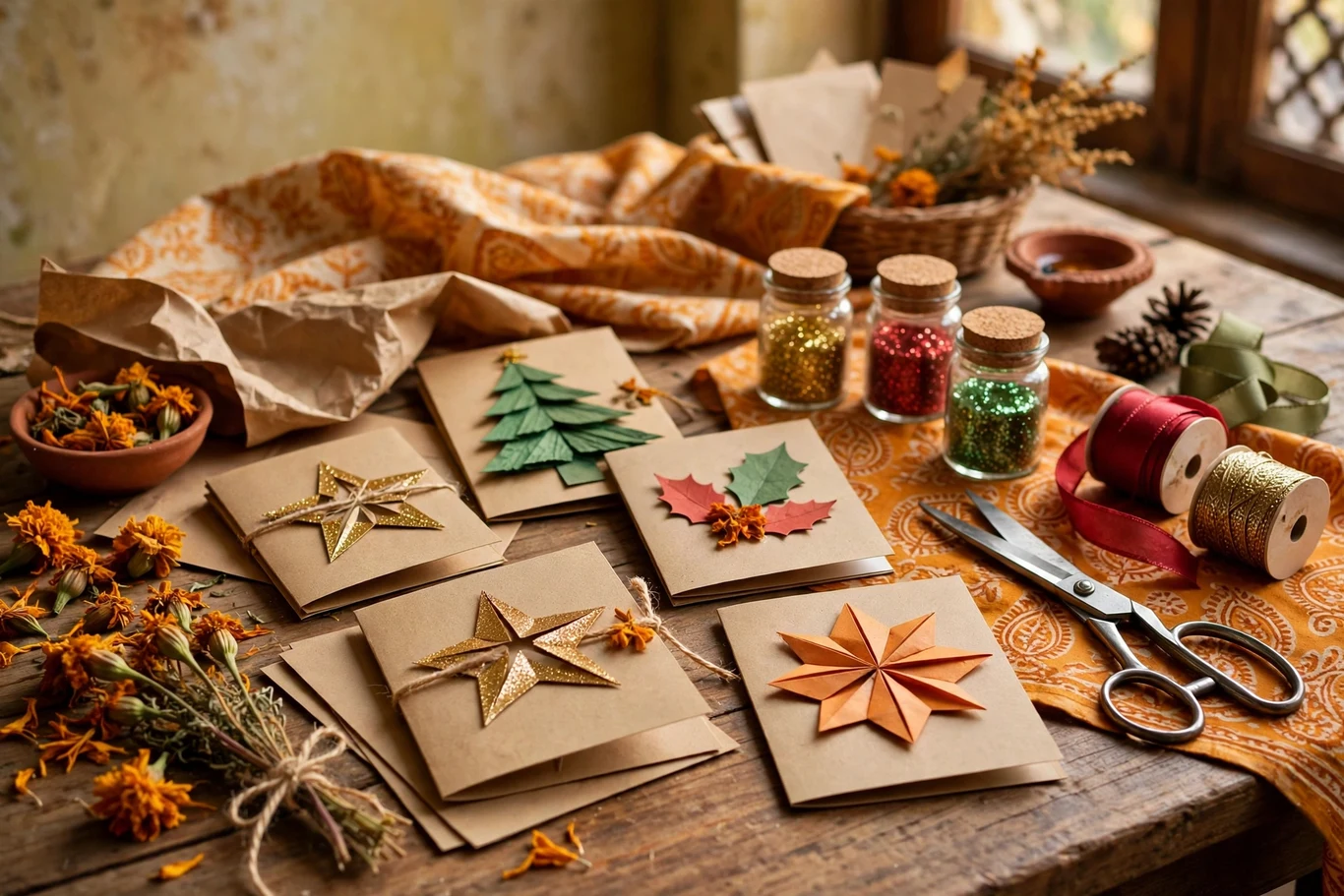
This guide gives you 12 DIY Christmas card ideas that work with materials you already have at home or can buy from any Indian stationery shop: old saree borders, marigold flowers, newspapers, buttons from old clothes and plain chart paper. Each idea includes steps, a cost estimate and a tip, so you can pick the ones that suit your time and skill. No special craft tools needed, just scissors, glue and a little patience.
What You Need Before You Start
Most cards in this guide use the same basic kit: A4 or A5 chart paper in white, red and green, a pair of scissors, a glue stick, a ruler, a pencil, and a black pen for outlines and messages. Optional extras are glitter, ribbons, buttons, old fabric scraps, dried flowers and stickers.
Buy chart paper in a pack of 10 sheets for about Rs 50, and a glue stick for Rs 30. Everything else can come from your home: old gift wrap, magazine pages, saree borders, bangles that broke, and buttons from old shirts. Set up your table with a newspaper underneath, because glitter travels further than you think.
1. Pop Up Christmas Tree Card
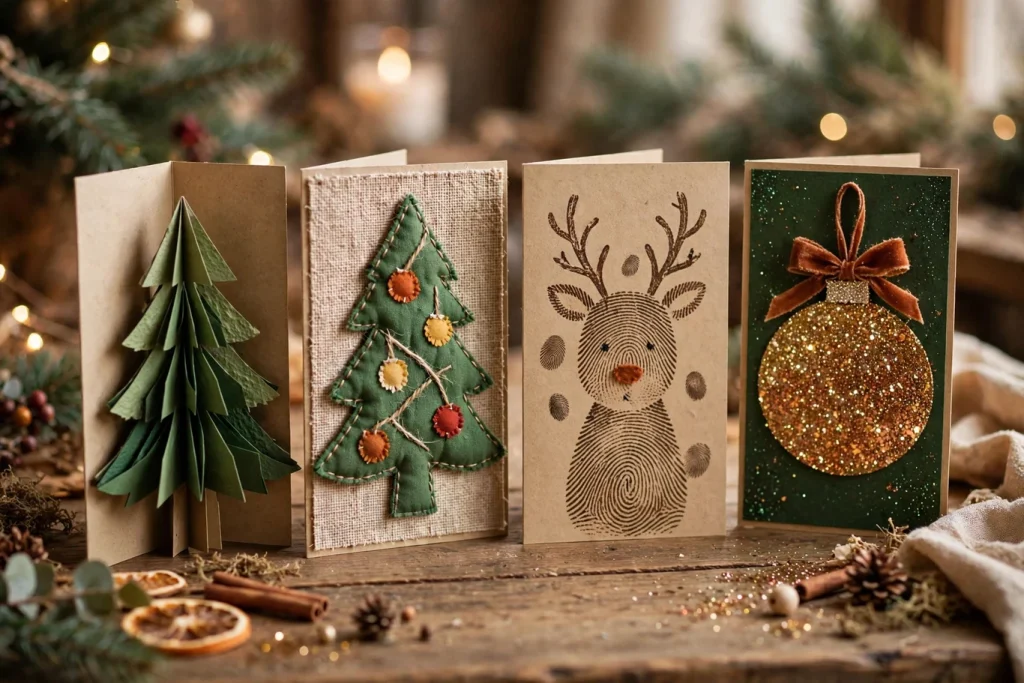
Fold a green chart paper card in half. Cut three triangles of decreasing size from green paper and fold each in half. Glue one side of each folded triangle to the centre fold of the card, largest at the bottom and smallest at the top, so the tree pops up when the card opens. Add a star on top and tiny paper baubles.
This is the most impressive card on the list and it takes only 15 minutes. It works best on a slightly larger card, A5 size, so the tree has room to stand. Cost per card is about Rs 15.
2. Fabric Tree Card with Saree Border
Cut a triangle from an old saree border or any patterned fabric scrap. Glue it onto the front of a plain card as the tree, add a small star cut from gold paper on top, and glue a thin strip of the same fabric along the bottom edge as a border. The fabric gives the card a rich, textured look that paper alone cannot match.
This is a lovely way to reuse a saree border that is too beautiful to throw away. The card looks expensive and costs almost nothing. It is also a thoughtful gift for older relatives who will appreciate the Indian touch.
3. Fingerprint Reindeer Card
Put brown paint on a fingertip and press it onto the card to make the reindeer head. Add two antlers with a thin paintbrush or a brown pen, a red fingerprint for the nose, and two small white dots with black centres for the eyes. Write “Merry Christmas” underneath in red.
Children love this card because it is messy and personal, and grandparents love it because it carries the child’s actual fingerprint. Use washable paint and keep wet wipes nearby. Cost per card is under Rs 10.
4. Marigold Flower Card
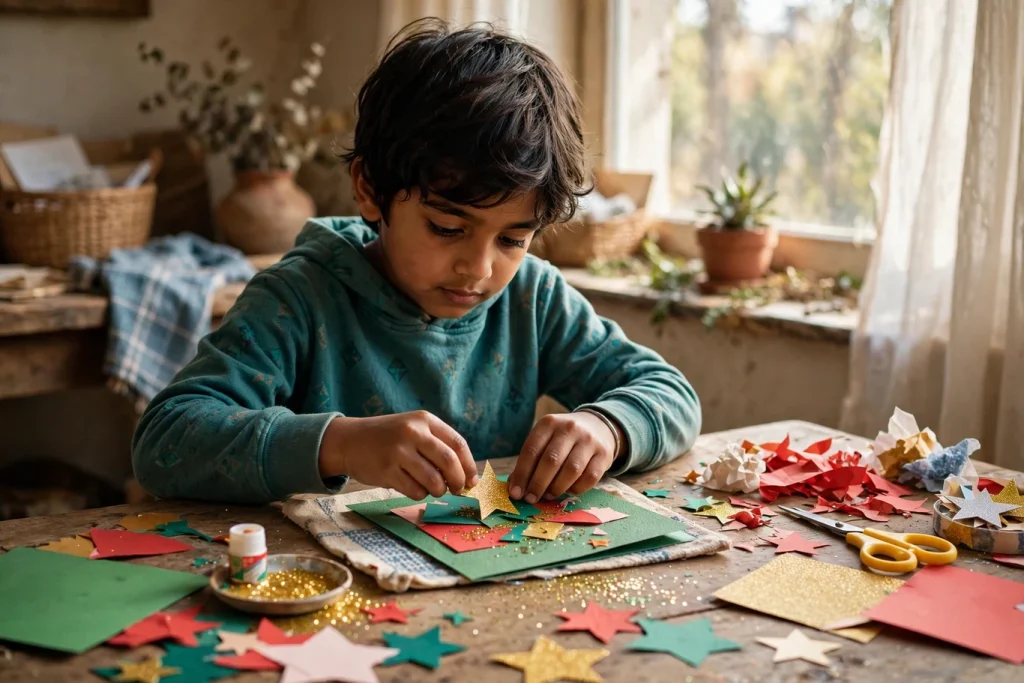
Glue a single dried marigold flower, or a small cluster of petals arranged in a circle, onto the front of a cream coloured card. Add a thin gold border drawn with a metallic pen, and write your message inside. The marigold gives the card a distinctly Indian Christmas feel, warm and familiar.
Dry the marigolds by pressing them in a heavy book for two days before you use them. If fresh flowers are hard to find, a marigold design drawn with orange and yellow pens works almost as well.
5. Button Christmas Tree Card
Arrange green buttons of different sizes in a triangle shape on the front of the card, largest at the bottom and smallest at the top, and glue them down. Add a star button or a gold paper star at the top, and draw a small brown trunk underneath with a pen. Buttons from old shirts and kurtas are perfect for this.
This card is ideal for using up a button box, and the three dimensional texture makes it feel special. It takes about 10 minutes and costs nothing if you already have buttons at home.
6. Washi Tape Christmas Tree Card
Stick strips of washi tape, or thin strips of coloured paper, horizontally across the front of the card in decreasing lengths to form a tree shape. Add a star sticker on top and a small rectangle of brown paper as the trunk. The clean lines make this card look modern and tidy.
If you do not have washi tape, cut strips from old gift wrap or magazine pages. This is the fastest card on the list, about 5 minutes, and it is a good choice when you need to make 20 cards for a school or office.
7. Handprint Wreath Card
Paint a child’s palm green and press it in a circle on the front of the card, overlapping the prints to form a wreath. Add red fingerprint berries around the circle and tie a small ribbon bow at the bottom. This card is a keepsake as much as a greeting, because it records how small the child’s hand was that Christmas.
Make this one early in December so the paint has time to dry completely before you post it. It is the best card on this list for sending to grandparents who live far away.
8. Quilled Paper Snowflake Card
Cut thin strips of white and silver paper, about 5 mm wide. Roll them into tight coils with a toothpick, pinch them into teardrop shapes, and glue six teardrops in a circle to form a snowflake on the front of a dark blue or dark green card. Add a tiny bead or a dot of glitter glue in the centre.
Quilling looks delicate and takes a little practice, but the result is stunning. Start with one snowflake per card and keep the rest of the design simple. This card suits older children and adults who enjoy detailed craft.
9. Newspaper Christmas Tree Card
Cut a tree shape from an old newspaper, then decorate it with small circles cut from red and green paper as baubles. Glue the tree onto a plain white card and add a handwritten message. The black and white newspaper against the bright baubles looks stylish and modern, and it is completely free.
This is the most eco friendly card on the list, and a good talking point for a family that cares about reuse. It also uses up the newspaper pile that every Indian home seems to have.
10. Glitter Ornament Card
Draw three or four bauble shapes on the front of the card with a glue pen, or with a thin line of white glue. Sprinkle glitter over the glue, shake off the excess, and draw a small string from the top of each bauble to the top edge of the card with a pen. The glitter catches the light beautifully.
Do this step over a tray or a newspaper so you can pour the excess glitter back into its container. Red, gold and green glitter on a white card is the classic combination, and the whole card takes 10 minutes plus drying time.
11. Photo Christmas Card
Print a small family photo, about 4 by 6 inches, and glue it onto the front of a folded card. Draw a simple frame around it with a metallic pen, add a paper star or a small ribbon in one corner, and write a personal message inside. A photo card turns a greeting into a memory that relatives keep for years.
Print photos at a local studio for Rs 10 to Rs 20 each, or use a home printer. This card is the best choice for families who live in different cities and want to share a recent photo with their Christmas wishes.
12. 3D Paper Star Card
Cut five identical star shapes from gold or red paper. Fold each star in half and glue one half of each star to the next, forming a three dimensional star that stands out from the card. Glue the finished star onto the front of a plain card and add a short message underneath.
The 3D star is the showpiece card of this list, and it is easier than it looks. Children aged 8 and above can make it with a little help. It folds flat enough to fit in an envelope if you press it gently, so it is safe to post.
Message Ideas to Write Inside
A handmade card deserves a message that is just as personal. Here are a few that work for Indian families: “Wishing you a Christmas full of light, laughter and plum cake”, “May your home be as warm as your heart this Christmas”, “Merry Christmas from our home to yours, with love and laddoos”, and for children, “Santa is proud of you this year, keep shining”.
Keep the message short and handwritten. A long printed message feels less personal than two lines in your own handwriting. If you are making cards for colleagues or neighbours, a simple “Merry Christmas and a Happy New Year” with your family name is perfect.
How to Make Cards in Bulk
If you need 20 or more cards, for a school class or an office, work in batches. Cut all the card bases first, then all the trees, then all the decorations, and assemble them in a production line. Choose the fastest designs, the washi tape tree, the glitter ornament and the newspaper tree, and keep each card to two or three elements.
A batch of 20 simple cards takes about two hours, and the total cost is around Rs 200 to Rs 300, which is far less than buying 20 shop cards. Pack the finished cards in a shoebox with tissue paper between them so the glitter does not transfer.
Frequently Asked Questions
What materials do I need to make DIY Christmas cards at home in India?
Chart paper, scissors, glue, a ruler, a pencil and a black pen are enough for most designs. Add glitter, ribbons, buttons, fabric scraps and dried flowers for decoration. Most supplies are available at any local stationery shop.
How much does it cost to make a handmade Christmas card?
A simple handmade card costs Rs 10 to Rs 30 in materials. A batch of 20 cards costs around Rs 200 to Rs 300, which is much cheaper than buying shop cards.
What is the easiest DIY Christmas card for beginners?
The washi tape tree card takes about 5 minutes and needs only tape and paper. The glitter ornament card and the fingerprint reindeer card are also easy and work well for children.
How can I add an Indian touch to a Christmas card?
Use a saree border as a tree, add dried marigold flowers, use colours from Indian textiles, or write a message that mentions plum cake or family traditions. These small touches make the card feel personal and local.
Can I post a handmade Christmas card by regular mail?
Yes, most handmade cards fit in a standard envelope. For 3D cards like the pop up tree or the 3D star, press them flat gently and use a slightly larger envelope so nothing gets crushed.
Conclusion
A handmade Christmas card is a small act of care that costs almost nothing and means a great deal. Whether you choose the pop up tree, the fabric tree from an old saree border, or a simple fingerprint reindeer made by a child, the card carries something no shop can sell: the time and thought of the person who made it. Pick two or three designs from this list, gather your materials this weekend, and make your cards in one relaxed evening. Your family and friends will keep them long after Christmas is over, and next year you will have a whole new set of ideas to try.
