

Introduction
When a wedding comes to an Indian home, the whole house changes. The entrance becomes a welcome gate, the living room becomes a gathering hall, the terrace becomes a venue, and even the kitchen works overtime. “Shaadi wala ghar” is not just a phrase, it is a feeling: lights in the evening, flowers in the morning, music from somewhere, and guests arriving at all hours. Decorating for a home wedding is therefore different from decorating for a party. It must look festive, work for rituals, and stay comfortable for family staying for days.
This guide brings together 15 wedding home decoration ideas in India, for flats and houses, for Hindu, Muslim, Christian, and Sikh weddings, and for budgets from simple to grand. Competitor guides often list only generic decor, or show only large venues, and they miss the practical side: space for the bride to get ready, seating for elders, storage for gifts and mithai, and a plan that survives three days of functions. This guide fills those gaps, with room by room ideas, flower choices that last, lighting plans, and a timeline that keeps the family calm.
1. Start With a Wedding Plan, Not With Flowers
Before ordering flowers, make a simple plan. List the functions: mehndi, sangeet, haldi, wedding, and reception, if any are at home. Note which rooms are used for each function, how many guests are expected at peak time, and where the bride and groom will get ready. This plan decides everything else.
Declutter first. Move extra furniture to one room, clear corridors, and create storage for gifts, suitcases, and mithai boxes. A clean, open house photographs better and feels calmer during a busy wedding week. Share the plan with the decorator, if you hire one, and with family members who will manage guests, so everyone knows which room is for what.
2. Make the Entrance Speak Wedding
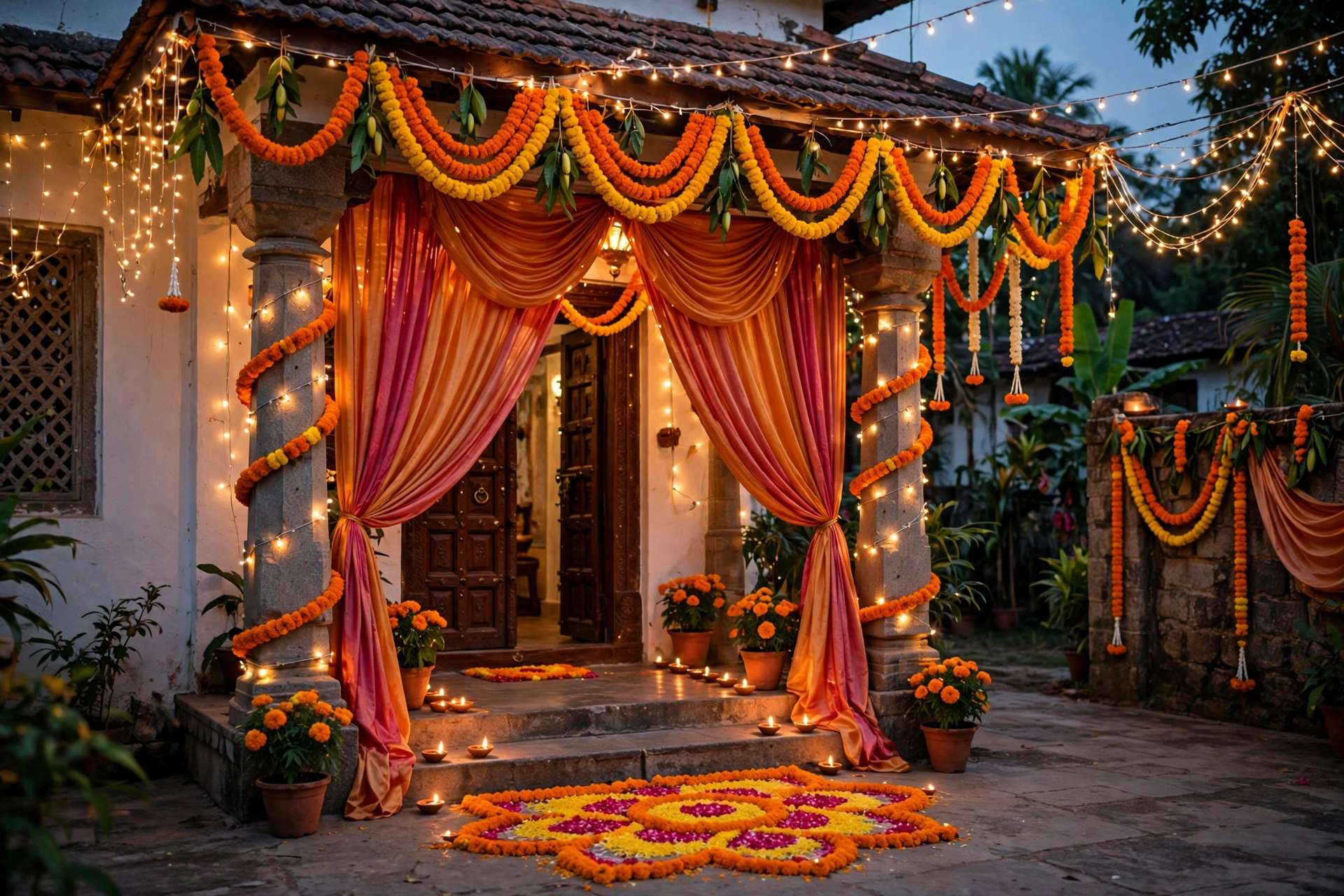
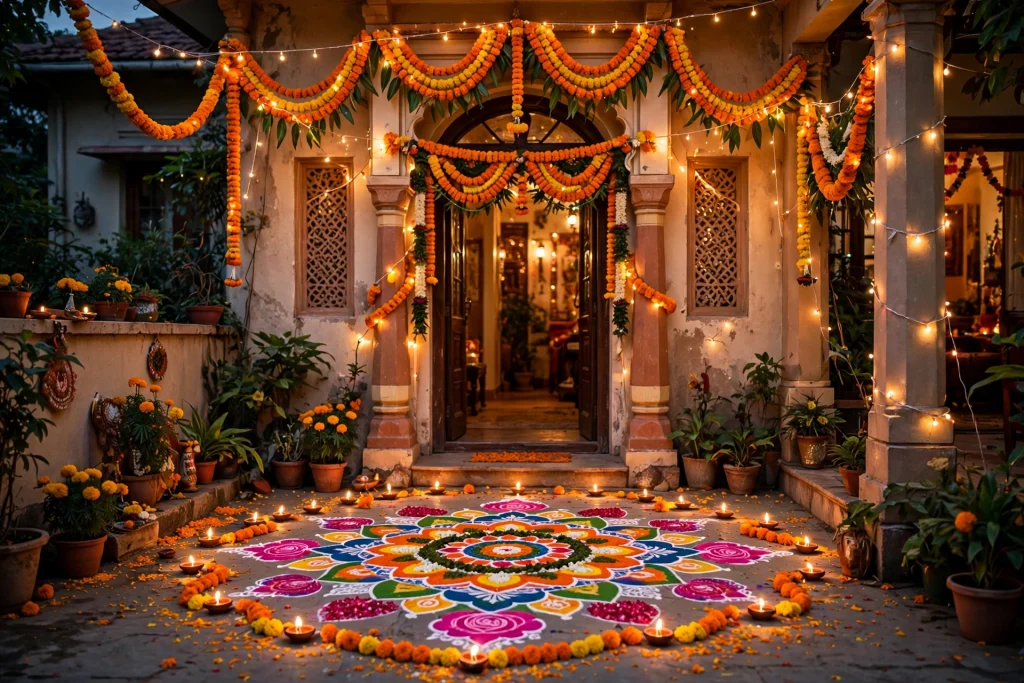
The entrance sets the tone the moment guests arrive. Decorate the main door with a toran of marigold flowers, mango leaves, or a fabric toran in the wedding colours. Add a rangoli at the doorstep, with colours that match the theme, and place two large planters, brass urlis with floating flowers, or lanterns on either side.
For a flat, a decorated door, a name board, and lights along the corridor are enough, and they must respect society rules and neighbours. For a house, add a gate arch with flowers and drapes, and a welcome sign with the couple’s names. Keep the entrance clear for elders and for the baraat, if it arrives at home, and keep a mat that handles muddy shoes in winter.
3. Choose Wedding Colours and a Theme
Choose two main colours and one metallic accent, and use them everywhere: drapes, cushions, flowers, tablecloths, and even gift wrapping. Popular Indian wedding palettes include red and gold, pink and gold, purple and gold, orange and yellow, and pastel pink and mint for daytime weddings. The theme can be traditional, royal, floral, or modern minimal, but it should suit the family’s rituals and the season.
Winter weddings suit deep colours and warm lights. Summer weddings suit pastels and light fabrics that breathe. Share the palette with family members buying clothes, so family photos look coordinated without being forced. A clear palette also stops last minute shopping, because every purchase can be checked against the theme.
4. Flowers: Marigolds, Roses and Jasmine
Flowers make the biggest visual difference in an Indian home wedding. Marigolds are the workhorse: cheap, bright, long lasting, and available in yellow and orange across India. Roses add elegance for the mandap and the couple’s seating. Jasmine adds fragrance for hair, garlands, and small bowls near the entrance.
Use flowers in layers: large garlands at the entrance, medium arrangements on tables, and small bowls of petals in bathrooms and bedrooms. Order flowers a day before each function, not a week before, because fresh flowers wilt in Indian heat and in heated winter rooms alike. Keep a bucket of water for spare garlands, and ask the florist for a morning delivery on the wedding day itself.
5. Fairy Lights and Lighting for Every Evening
Lighting turns a decorated home into a wedding home after sunset. String fairy lights along the balcony grill, the terrace railing, the entrance, and the staircase. Add warm white lights in the living room, and coloured lights only as an accent, so the house does not look like a fairground.
For the mandap or the main seating area, use a mix of ceiling lights, lamps, and candles in glass holders. LED candles are safer with drapes and flowers. Keep one well lit path from the gate to the main hall, for elders and for photographers. Check all lights the evening before the wedding, and keep spare strings and batteries ready.
6. Drapes, Fabrics and Ceiling Decor
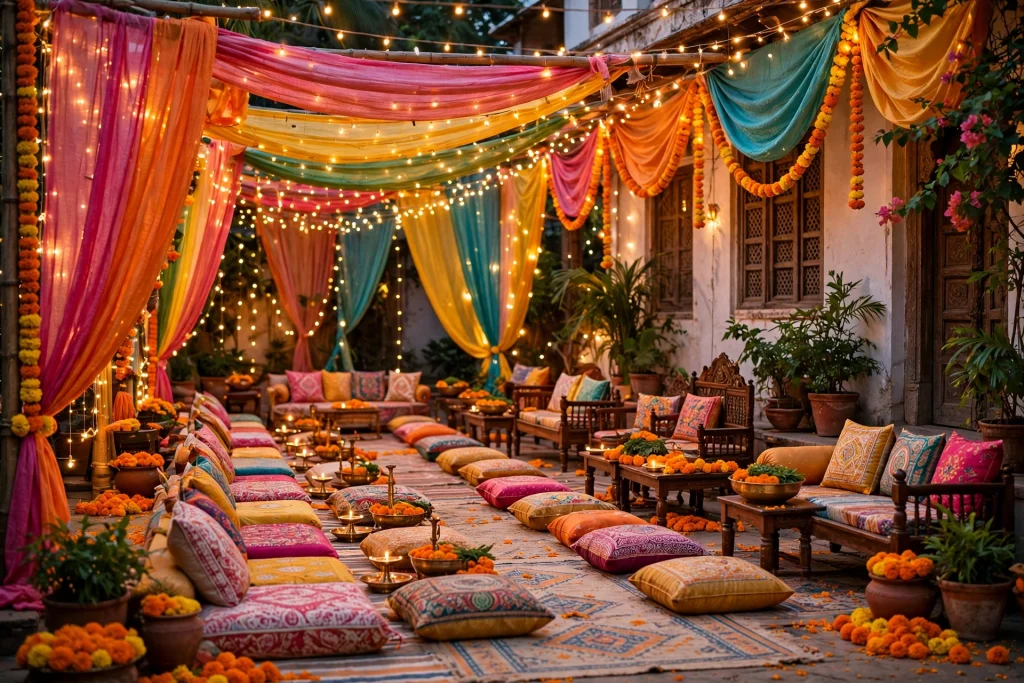
Drapes transform a plain ceiling into a wedding venue. Hang sheer fabric in the wedding colours from the living room ceiling to the walls, or from a terrace frame, to create a canopy effect. Use light fabrics like net, georgette, or organza, which move gently and photograph well.
In a small flat, drape fabric only over the main seating wall, not the whole ceiling, to avoid a crowded feeling. Add a chandelier, a set of hanging lanterns, or a floral chandelier over the couple’s seating for a focal point. Keep drapes away from fans, heaters, and open flames, and tie them securely so they do not fall during dancing.
7. The Mandap at Home: Simple, Sacred and Photogenic
If the wedding ceremony is at home, the mandap is the heart of the decor. It can be a simple frame decorated with flowers, drapes, and lights, placed in the living room, terrace, or garden. Choose a spot with enough space for the priest, the couple, parents, and photographers, plus a clear path for rituals.
Keep the mandap background simple, because photos focus on the couple. A floral backdrop, a draped curtain, and two brass lamps are enough. Place the havan kund, if used, on a fire safe base, with space around it and a bucket of sand nearby. Test the mandap lighting in the evening, because wedding photos depend on it, and keep a small stool and water nearby for elders who must sit for a long ceremony.
8. Seating That Works for Guests of All Ages
Wedding seating must work for children, adults, and elders at the same time. Use a mix: sofas and chairs for elders, floor seating with bolsters for younger guests, and standing space near food. Cover chairs with fabric in the wedding colours, and add cushions for comfort.
For a home wedding, rent extra chairs rather than buying them, and return them the next day. Keep a few chairs near the entrance for elders who need rest, and keep pathways clear for serving food. A seating plan, even a rough one, prevents crowding at the mandap and at the food counter, which are the two busiest spots.
9. The Bride’s Room and Getting Ready Space
The bride’s room deserves special care, because it is where photos, makeup, and family moments happen for hours. Clean it fully, add a full length mirror, good lighting, and a comfortable chair. Decorate simply: fresh flowers, a few fairy lights, and a clean backdrop for photos.
Keep a table for makeup, jewellery, and the wedding outfit, plus water, snacks, and a phone charger. Hang the outfit where it will not crease, and keep the room cool and private. A calm, beautiful bride’s room helps the whole wedding day feel organised, and it gives photographers a lovely space for getting ready photos.
10. Tables, Food Counters and Gift Corners
Food is central to an Indian wedding, so style the food area well. Cover tables with cloth in the wedding colours, add a flower centrepiece, and label dishes clearly for guests with dietary needs. Keep the food counter away from the mandap, so queues do not block rituals, and keep drinking water easily available.
Create a gift corner near the entrance, with a table, a box for envelopes, and a person to manage it during peak hours. Keep mithai boxes in a cool room, not near heaters, and store them in labelled stacks for easy distribution. A tidy food and gift area prevents chaos, even when the house is full.
11. Staircase, Balcony and Terrace Decor
Do not forget the spaces between rooms. Decorate the staircase railing with flowers and fairy lights (https://homefestideas.com/holiday-decor/diwali-staircase-decoration-ideas-indian-homes-2026/), because it appears in many photos. Style the balcony with plants, lights, and a small seating corner for guests who want fresh air. If the terrace is used, add a canopy, lights, and a dance floor area with a non slip surface.
For terrace weddings in winter, keep shawls or blankets for elders, and arrange heaters safely away from drapes. For summer weddings, add fans, shade, and water stations. These transitional spaces make a home wedding feel like a venue, not just a decorated living room.
12. Rangoli, Diyas and Traditional Touches
Traditional touches give a home wedding its soul. A rangoli at the entrance, diyas along the corridor, a kalash at the door, and a small puja corner decorated with flowers all signal celebration in a way that generic decor cannot. Use LED diyas near drapes, and real diyas only where they are safe and supervised.
Add cultural elements that suit the family’s traditions: a swing decorated with flowers, a photo wall of the couple, or a message board where guests write blessings. For more home fragrance ideas, see our guide to home fragrance for Indian homes (https://homefestideas.com/home-decor/diwali-home-fragrance-ideas-indian-homes-2026/), which helps the house smell welcoming from the entrance onward. These touches are inexpensive, but guests remember them.
13. Music, Photos and Guest Comfort
A wedding home must sound and feel welcoming. Arrange a small speaker system for music, with volume that allows conversation. Create a photo corner with a backdrop, props, and good lighting, so guests take photos without crowding the mandap. Keep a first aid box, medicines, phone chargers, and a list of local taxi numbers ready.
Plan for children: a small play corner with toys and a family member to watch them keeps parents relaxed. Plan for elders: a quiet room where they can rest, with water and a chair. Guest comfort is decor too, because a comfortable guest enjoys the celebration more and stays longer.
14. Budget Planning for a Home Wedding
Home wedding decor can range widely. A simple, beautiful home decor plan costs roughly Rs 20,000 to Rs 50,000, covering flowers, lights, drapes, and rented seating. A grand plan with a professional decorator, a large mandap, and extensive floral work can cost Rs 1,00,000 or more, depending on the city and the number of functions.
Save money by reusing Diwali lights and drapes, using marigolds generously instead of imported flowers, and decorating only the rooms guests will see. Hire a decorator for the mandap and entrance, and do the rest with family, if time allows. Get two or three quotes, check past work photos, and confirm what is included: flowers, lights, labour, setup time, and removal after the wedding.
15. Timeline: From One Week Before to the Day After
One week before, finalise colours, order drapes and rentals, and deep clean the house. Three days before, set up lights and drapes, and test them in the evening. One day before, order fresh flowers, set up the mandap frame, and prepare the bride’s room. On the wedding morning, place fresh flowers, light diyas, and do a final walkthrough of every room.
After the wedding, remove flowers the next morning, return rentals, and store reusable drapes and lights labelled for the next celebration. A timeline prevents the common wedding week panic, where everything is left to the last evening. Share the timeline with family, so one person is not carrying the whole plan alone.
Related guide: see our first birthday decoration ideas at home in India (https://homefestideas.com/party-ideas/first-birthday-decoration-ideas-at-home-india-2026/) for more celebration styling ideas for family events at home.
Frequently Asked Questions
How can I decorate my home for a wedding on a low budget?
Use marigolds, fairy lights, and drapes in two wedding colours, and focus on the entrance, the mandap, and the main seating area. Reuse lights and fabrics from earlier festivals, rent seating, and decorate only the rooms guests will use.
What is the best colour theme for an Indian home wedding?
Red and gold is classic, pink and gold suits most families, and pastel themes suit daytime and summer weddings. Choose two main colours and one metallic accent, and use them consistently across drapes, flowers, cushions, and tablecloths.
How do I decorate a small flat for a wedding?
Focus on one main wall, the entrance door, and the balcony. Use vertical decor, foldable seating, and light fabrics. Keep pathways clear, use a photo corner instead of a large stage, and hold larger functions on the terrace or in a nearby hall if the flat is very small.
When should I start decorating for a home wedding?
Start planning two to three weeks before, set up lights and drapes two to three days before, and place fresh flowers on the morning of each function. A staged plan avoids last minute stress and keeps flowers fresh.
Do I need a professional decorator for a home wedding?
Not always. A decorator helps for a large mandap, a terrace venue, or a grand floral design. For a simple home wedding, family can handle entrance, lights, and seating, with a florist for fresh flowers and a rental service for chairs and drapes.
Conclusion
A wedding home in India is decorated with more than flowers and lights. It is decorated with planning, with space for rituals, with comfort for elders and children, and with traditional touches that make guests feel welcomed. Choose a colour palette, make the entrance beautiful, build a simple mandap, light every evening warmly, and keep a timeline so the family can enjoy the wedding instead of managing chaos. When the house is ready, the celebration can begin, and the memories made in that decorated home will last far longer than the flowers themselves.
